
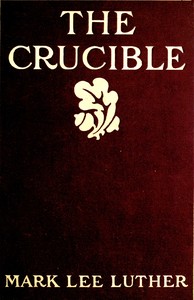
The Crucible
Written by Mark Lee Luther
Chaptra reads alongside you — AI insights, chapter breakdowns and reader discussions for every book. Join free
About this book
Reading guide
Themes, characters and key ideas in The Crucible, written by Chaptra AI.
- about 9 hours
- intermediate
- Defiant
- Introspective
- Oppressive
Mark Lee Luther's "The Crucible" introduces Jean Fanshaw, a defiant young woman committed to a refuge for girls in the early 20th century after clashing with her family. Rejecting traditional feminine roles and insisting on being called "Jack," Jean embodies a fierce struggle against societal expectations and gender constraints. The novel delves into her complex family dynamics and the restrictive environment of the refuge, setting the stage for a profound journey of self-discovery. It explores themes of personal freedom, identity, and the oppressive forces shaping women's lives during that era, promising a narrative rich in emotional tension and rebellion.
“My name is Jack, not Jean. You will remember that, Miss Blair, for as long as I remain in this... refuge.”
Key themes
- Gender Identity and Expression
- This theme is central to the novel, explored through Jean's insistence on being called 'Jack' and her fundamental rejection of traditional feminine roles. It delves into the internal conflict of aligning one's inner sense of self with societal expectations of gender, highlighting the struggle for authentic expression in a restrictive era.
- Societal Expectations and Conformity
- The novel critically examines the pervasive societal expectations placed upon women in the early 20th century and the pressures to conform. The refuge serves as a powerful symbol of these expectations, acting as an institution designed to enforce conformity and 'correct' deviations from the norm.
- Personal Freedom vs. Constraint
- This theme explores the fundamental human desire for autonomy and the struggle against various forms of constraint—physical, emotional, and societal. Jean's journey is a quest for personal freedom, both from the physical confinement of the refuge and the psychological chains of others' expectations.
Worth discussing
Discuss Jean's insistence on being called 'Jack.' What does this symbolize for her and for the broader themes of the novel?
Chapter-by-chapter breakdowns, character arcs and the full thematic analysis come with a free account.
Discussions
No one has started one yet
Questions this book opens up
No discussions yet
Be the first to start a discussion about this book!
Sign up to start the discussionReviews
No reviews yet
Be the first to review this book!