
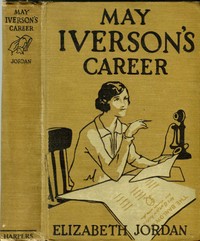
May Iverson's Career
Written by Elizabeth Garver Jordan
Chaptra reads alongside you — AI insights, chapter breakdowns and reader discussions for every book. Join free
About this book
Read it with a club
Chaptra's love and romance clubs — small groups reading the same books and talking as they go.


Enemies to Lovers Tribunal
Love and romance
- 4 members
- 4 discussions
- Active Sep 11
One trope, examined to destruction. We rank them, we argue, and we throw out the ones that are really just "he was rude once at a party". This is a Chaptra house club — set up and moderated by us to get the conversation going. Open to everyone; jump in anywhere.
Read May Iverson's Career alongside people who are reading it too.
Also here: Hopeless Romantics Anonymous
Chaptra Prime — paid clubs, every club feature, and unlimited reading support, for $5 a month or $60 once.
See PrimeReading guide
Themes, characters and key ideas in May Iverson's Career, written by Chaptra AI.
- about 8 hours
- intermediate
- Ambitious
- Challenging
- Adventurous
Elizabeth Garver Jordan's "May Iverson's Career" chronicles the transformative journey of its protagonist, May Iverson, as she leaves the sheltered confines of a convent for the demanding world of early 20th-century New York journalism. Initially torn between a religious life and a secular career, May ultimately embraces her father's suggestion to pursue reporting, seeking independence and purpose. Her inaugural assignment, a chilling investigation into a haunted house, quickly immerses her in the thrilling yet perilous realities of her chosen profession, involving a mysterious old woman and escaped convicts. This foundational experience not only tests May's resolve but also foreshadows the complex ethical and personal challenges she will confront in a bustling urban environment, shaping her understanding of life, relationships, and her own burgeoning aspirations.
“The city called to me with a promise of purpose, a stark contrast to the quiet certainty of the convent walls.”
Key themes
- Female Ambition and Independence
- The central theme exploring May's desire to forge her own path outside traditional female roles. It delves into her ambition to have a career, financial independence, and a sense of purpose beyond marriage or religious life, reflecting the broader 'New Woman' movement of the era.
- Innocence vs. Experience
- This theme tracks May's rapid transition from the sheltered, idealistic environment of the convent to the harsh, complex realities of urban life and professional journalism. It explores her loss of naiveté and her growth in understanding the world's darker aspects.
- The Reality and Ethics of Journalism
- The novel examines the practicalities, excitement, and ethical dilemmas faced by early 20th-century journalists. It highlights the sensationalist aspects of reporting, the pursuit of a 'scoop,' and the potential for moral compromises in the quest for a story.
Worth discussing
How does May's transition from the convent to journalism symbolize a broader societal shift for women in the early 20th century?
Chapter-by-chapter breakdowns, character arcs and the full thematic analysis come with a free account.
Discussions
No one has started one yet
Questions this book opens up
No discussions yet
Be the first to start a discussion about this book!
Sign up to start the discussionReviews
No reviews yet
Be the first to review this book!