
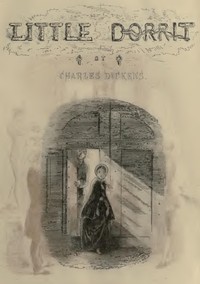
Little Dorrit
Written by Charles Dickens
Chaptra reads alongside you — AI insights, chapter breakdowns and reader discussions for every book. Join free
About this book
Read it with a club
Chaptra's love and romance clubs — small groups reading the same books and talking as they go.


Enemies to Lovers Tribunal
Love and romance
- 4 members
- 4 discussions
- Active Sep 11
One trope, examined to destruction. We rank them, we argue, and we throw out the ones that are really just "he was rude once at a party". This is a Chaptra house club — set up and moderated by us to get the conversation going. Open to everyone; jump in anywhere.
Read Little Dorrit alongside people who are reading it too.
Also here: Hopeless Romantics Anonymous
Chaptra Prime — paid clubs, every club feature, and unlimited reading support, for $5 a month or $60 once.
See PrimeReading guide
Themes, characters and key ideas in Little Dorrit, written by Chaptra AI.
- about 20 hours
- advanced
- dark
- satirical
- melancholy
Charles Dickens's "Little Dorrit" is a sprawling social novel that meticulously critiques Victorian society through the lens of imprisonment, both literal and metaphorical. It follows the life of Amy Dorrit, born and raised in the Marshalsea debtors' prison, whose selfless devotion to her family stands in stark contrast to the superficiality and corruption of the outside world. The narrative intertwines her journey with that of Arthur Clennam, a man seeking truth and purpose, as they uncover dark family secrets, navigate the complexities of wealth and poverty, and expose the systemic failures of institutions like the Circumlocution Office. The novel culminates in a powerful indictment of societal pretense, financial speculation, and the various forms of entrapment that bind its characters.
“"It is a world of self, and a world of mystery."”
Key themes
- Imprisonment and Freedom
- This is the overarching theme, explored literally through the Marshalsea debtors' prison and metaphorically through various forms of societal, psychological, and institutional confinement. Characters are imprisoned by debt, social conventions, pride, guilt, bureaucracy (the Circumlocution Office), and their own pasts. True freedom is shown to be an internal state, not merely the absence of physical chains or the presence of wealth.
- Wealth and Poverty
- The novel meticulously dissects the impact of both extreme poverty and sudden wealth on individuals and families. It challenges the notion that wealth automatically brings happiness or moral superiority, often showing how it can corrupt, foster pretense, and alienate individuals from their true selves. Conversely, it highlights the dignity and moral strength that can arise from poverty, particularly in Amy Dorrit's character.
- Social Injustice and Critique of Institutions
- Dickens uses "Little Dorrit" to launch a scathing attack on the inefficiencies, injustices, and moral decay within Victorian society and its institutions. The novel critiques the legal system (debtors' prison), government bureaucracy (the Circumlocution Office), and the superficiality of the class system. It exposes how these structures perpetuate suffering, stifle progress, and reward corruption while punishing the innocent.
Worth discussing
How does Dickens use the Marshalsea prison as a metaphor for various forms of societal and psychological imprisonment throughout the novel?
Chapter-by-chapter breakdowns, character arcs and the full thematic analysis come with a free account.
Discussions
No one has started one yet
Questions this book opens up
No discussions yet
Be the first to start a discussion about this book!
Sign up to start the discussionReviews
No reviews yet
Be the first to review this book!