
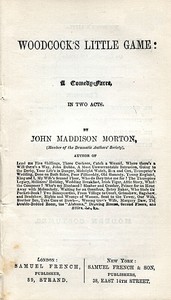
Woodcock's Little Game: A Comedy-Farce, In Two Acts
Written by John Maddison Morton
Chaptra reads alongside you — AI insights, chapter breakdowns and reader discussions for every book. Join free
About this book
Reading guide
Themes, characters and key ideas in Woodcock's Little Game: A Comedy-Farce, In Two Acts, written by Chaptra AI.
- about 8 hours
- intermediate
- humorous
- lighthearted
- chaotic
John Maddison Morton's "Woodcock's Little Game" is a classic Victorian comedy-farce in two acts, centering on the newly married Mr. Woodcock. The play humorously depicts the chaos that ensues as Woodcock attempts to navigate the expectations of his marital role and shed his 'wild past,' all while contending with a meddling mother-in-law and conspiring friends. Through a series of misunderstandings, deceptions, and mistaken identities, the narrative explores the intricacies of relationships and the societal pressures of the era. Ultimately, the play delivers a lighthearted resolution, characteristic of the farcical genre, blending witty dialogue with physical comedy.
“"A married man, sir, is a reformed man. My wild oats are sown, harvested, and sold for a pittance!"”
Key themes
- Deception and Misunderstanding
- This theme is the engine of the farce, exploring how lies, half-truths, and mistaken identities create escalating comedic chaos. The play demonstrates the intricate and often absurd consequences when characters attempt to manipulate reality to serve their immediate needs or maintain appearances, leading to a tangled web of confusion.
- Marriage and Societal Expectations
- The central theme revolves around the pressures and expectations placed upon individuals, particularly men, upon entering marriage in Victorian society. Mr. Woodcock's struggle to conform to the ideal of a respectable husband while simultaneously dealing with his past highlights the societal scrutiny and rigid norms of the era.
- The Past Haunting the Present
- The play directly addresses how an individual's past actions and reputation can continue to influence and complicate their present circumstances, especially when attempting a fresh start. Mr. Woodcock's 'wild past' is not easily left behind, as friends and memories keep it alive, creating a comedic conflict with his desired future.
Worth discussing
How does the play use farce to comment on Victorian societal expectations for marriage and reputation?
Chapter-by-chapter breakdowns, character arcs and the full thematic analysis come with a free account.
Discussions
No one has started one yet
Questions this book opens up
No discussions yet
Be the first to start a discussion about this book!
Sign up to start the discussionReviews
No reviews yet
Be the first to review this book!