
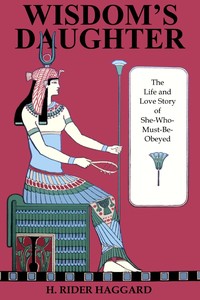
Wisdom's Daughter: The Life and Love Story of She-Who-Must-be-Obeyed
Written by H. Rider (Henry Rider) Haggard
Chaptra reads alongside you — AI insights, chapter breakdowns and reader discussions for every book. Join free
About this book
Reading guide
Themes, characters and key ideas in Wisdom's Daughter: The Life and Love Story of She-Who-Must-be-Obeyed, written by Chaptra AI.
- about 9 hours
- intermediate
- epic
- mystical
- tragic
H. Rider Haggard's "Wisdom's Daughter" serves as a prequel to his iconic novel "She," delving into the origins of the enigmatic immortal queen, Ayesha, or 'She-Who-Must-be-Obeyed.' The novel recounts Ayesha's life in ancient Egypt and the mystical lost city of Kôr, detailing her early mastery of arcane wisdom, her tragic love affair with the Greek priest Kallikrates, and the fateful discovery of the Flame of Life that grants her eternal youth and beauty but also an unbearable loneliness. It explores the circumstances that lead to her millennia-long wait for her beloved's reincarnation, setting the stage for the events of the original "She" narrative.
“"For what is wisdom, save the knowledge of the past and the present, and the foresight of the future?"”
Key themes
- Eternal Love and Obsession
- The central theme revolves around Ayesha's all-consuming, fated love for Kallikrates. It explores the idea of soulmates and love transcending lifetimes, but also the dark side of this devotion, manifesting as intense jealousy, possessiveness, and ultimately, obsession that drives Ayesha's actions and her eternal waiting.
- The Burden of Immortality
- The novel vividly portrays immortality not as a blessing, but as a profound curse. Ayesha gains eternal youth and beauty but is condemned to an endless, lonely existence, watching all she loves and knows perish. It questions the true value of life without the natural cycle of birth and death, and the psychological toll of infinite time.
- Wisdom vs. Emotion
- Ayesha is presented as incredibly wise and intelligent, mastering ancient lore and philosophy. However, her vast wisdom is constantly challenged and often overridden by her intense emotions, particularly her love for Kallikrates and her jealousy of Amenartas. This theme explores the conflict between rational thought and uncontrollable passion.
Worth discussing
How does Ayesha's first-person narration influence our understanding and sympathy for her character, especially compared to the third-person perspective in 'She'?
Chapter-by-chapter breakdowns, character arcs and the full thematic analysis come with a free account.
Discussions
No one has started one yet
Questions this book opens up
No discussions yet
Be the first to start a discussion about this book!
Sign up to start the discussionReviews
No reviews yet
Be the first to review this book!