
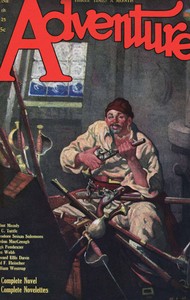
When East met West
Written by W. C. (Wilbur C.) Tuttle
Chaptra reads alongside you — AI insights, chapter breakdowns and reader discussions for every book. Join free
About this book
Reading guide
Themes, characters and key ideas in When East met West, written by Chaptra AI.
- about 4 hours
- intermediate
- humorous
- satirical
- adventurous
W. C. Tuttle's "When East Met West" is a humorous early 20th-century novelette set in the eccentric American Western town of Piperock. The story follows prospectors Ike Harper and Dirty Shirt Jones as they return to find their friend Magpie Simpkins spearheading a ludicrous effort to elevate Piperock's status as president of the newly formed Chamber of Commerce. Magpie's ambitious plan involves acquiring exotic zoo animals to attract tourists, leading to a series of farcical events, including animal escapes and a chaotic Labor Day celebration against rival town Paradise. Through satire and adventure, Tuttle explores themes of local pride, small-town ambition, and the absurd lengths people go to achieve recognition and success, all delivered with a light-hearted, comedic tone.
“"Piperock ain't just a place, gentlemen; it's an idea! And that idea, by thunder, needs a lion!"”
Key themes
- Small-Town Ambition and Civic Pride
- This is the central driving theme of the novelette. It explores the fervent desire of small communities, particularly in the developing American West, to elevate their status, attract visitors, and achieve recognition. The theme is presented satirically, highlighting the often-absurd lengths to which townsfolk will go in pursuit of these goals, often leading to impractical and chaotic schemes.
- The Absurdity of Progress
- The novelette humorously questions the very definition of 'progress' and the methods employed to achieve it. It suggests that blindly pursuing grand, unconventional ideas without practical consideration can lead to comical, and sometimes chaotic, outcomes. The story highlights the folly of equating 'status' or 'improvement' with superficial or ill-fitting additions to a community.
- Community Rivalry and Identity
- The fierce, yet ultimately good-natured, competition between Piperock and Paradise forms a significant thematic backbone. It explores how external competition can galvanize a community, shaping its identity and fostering a collective sense of purpose, even if that purpose leads to ludicrous actions. The rivalry highlights the human tendency to define oneself in opposition to others.
Worth discussing
How does Tuttle use humor and satire to critique small-town ambition and civic pride?
Chapter-by-chapter breakdowns, character arcs and the full thematic analysis come with a free account.
Discussions
No one has started one yet
Questions this book opens up
No discussions yet
Be the first to start a discussion about this book!
Sign up to start the discussionReviews
No reviews yet
Be the first to review this book!