
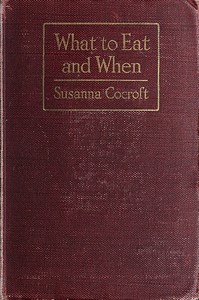
What to eat and when
Written by Susanna Cocroft
Chaptra reads alongside you — AI insights, chapter breakdowns and reader discussions for every book. Join free
About this book
Reading guide
Themes, characters and key ideas in What to eat and when, written by Chaptra AI.
- about 8 hours
- intermediate
- informative
- instructive
- didactic
Susanna Cocroft's "What to Eat and When" is an early 20th-century dietary guide that champions the scientific understanding of nutrition as fundamental to overall health and well-being. The book aims to demystify complex dietary principles, making the link between food choices and bodily functions accessible to the general public. Cocroft challenges historical perspectives that devalue the physical body, asserting that a sound physical state is crucial for mental vitality. Through its comprehensive introduction, the work prepares readers to explore detailed dietary guidelines, emphasizing balance and the vital role of various food elements.
“Understanding the right food choices is essential for maintaining good health and achieving well-being.”
Key themes
- The Importance of Dietetics and Nutrition
- This is the central, overarching theme. Cocroft argues that understanding and applying dietary principles is not merely an optional health improvement but a fundamental necessity for achieving and maintaining good health and overall well-being. She elevates dietetics to a critical science impacting every aspect of human life.
- Mind-Body Connection
- Cocroft directly challenges historical dualistic views that separate and often prioritize the soul/mind over the physical body. She advocates for a holistic perspective, asserting that a 'sound body supports a sound mind.' This theme emphasizes that physical health is not merely an aesthetic or functional concern but a prerequisite for mental and intellectual vitality.
- Empowerment Through Knowledge
- A core aim of the book is to make 'complex dietary concepts accessible to laypeople.' This reflects a belief that individuals, when equipped with the correct scientific understanding, can take control of their health. The book serves as a tool for public education, democratizing knowledge that was previously confined to scientific or medical circles.
Worth discussing
How did early 20th-century views on diet and health differ from contemporary understanding, and what similarities persist?
Chapter-by-chapter breakdowns, character arcs and the full thematic analysis come with a free account.
Discussions
No one has started one yet
Questions this book opens up
No discussions yet
Be the first to start a discussion about this book!
Sign up to start the discussionReviews
No reviews yet
Be the first to review this book!