
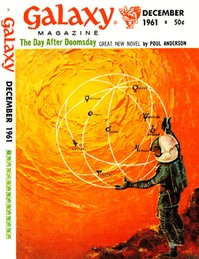
Wall of Crystal, Eye of Night
Written by Algis Budrys
Chaptra reads alongside you — AI insights, chapter breakdowns and reader discussions for every book. Join free
About this book
Reading guide
Themes, characters and key ideas in Wall of Crystal, Eye of Night, written by Chaptra AI.
- about 8 hours
- advanced
- mysterious
- disorienting
- existential
Algis Budrys's "Wall of Crystal, Eye of Night" is a seminal work of New Wave science fiction that plunges readers into the fragmented consciousness of Eric, a man who awakens in a bizarre, seemingly artificial world known as the "Wall of Crystal." Stripped of reliable memories and a clear sense of identity, Eric grapples with a reality that constantly shifts and defies logic, questioning whether his environment is a prison, a hallucination, or a meticulously constructed illusion. The novel is a profound psychological exploration of perception, memory, and the very nature of self, blurring the lines between sanity and delusion. Budrys masterfully crafts an unsettling atmosphere, inviting readers to share in Eric's existential dread and his desperate quest for truth in a world designed to obscure it.
“"The world was a wall of crystal and I was inside it, and sometimes I thought I could see out, but then I'd blink and it would be gone."”
Key themes
- Identity and Self-Perception
- The central theme revolves around Eric's struggle to reclaim and understand his identity in the absence of reliable memories. The novel explores how much of our 'self' is constructed by our past experiences and how fragile that construction can be. It questions whether identity is an inherent truth or a fluid narrative we tell ourselves.
- The Nature of Reality and Perception
- Budrys challenges the reader's and Eric's understanding of what constitutes reality. The 'Wall of Crystal' itself is a powerful symbol of subjective reality, where external events seem to be manifestations of internal states. The novel suggests that reality is not an objective, fixed entity, but rather a construct shaped by individual perception, memory, and psychological state.
- Alienation and Imprisonment
- Eric's predicament is one of profound isolation. He is alienated not only from the outside world but also from his own past and a coherent sense of self. The 'Wall of Crystal' functions as a literal and metaphorical prison, highlighting themes of confinement, loss of freedom, and the psychological impact of being cut off from authentic human connection and a stable environment.
Worth discussing
How does Budrys use the 'Wall of Crystal' as a metaphor for the human mind or the construction of reality?
Chapter-by-chapter breakdowns, character arcs and the full thematic analysis come with a free account.
Discussions
No one has started one yet
Questions this book opens up
No discussions yet
Be the first to start a discussion about this book!
Sign up to start the discussionReviews
No reviews yet
Be the first to review this book!