
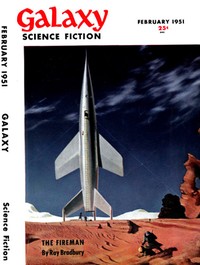
Two Weeks in August
Written by Frank M. Robinson
Chaptra reads alongside you — AI insights, chapter breakdowns and reader discussions for every book. Join free
About this book
Reading guide
Themes, characters and key ideas in Two Weeks in August, written by Chaptra AI.
- about 1 hours
- beginner
- humorous
- witty
- satirical
Frank M. Robinson's "Two Weeks in August" is a lighthearted science fiction short story from the 1950s, satirizing office life and the human tendency to exaggerate. The narrative follows an unnamed protagonist, an office worker facing a financially constrained staycation, who fabricates an extravagant trip to Mars to outdo his perpetually boastful colleague, McCleary. This playful deception sets the stage for a humorous exploration of imagination versus mundane reality. However, the story takes an unexpected twist when McCleary genuinely returns from an actual trip to Mars, complete with verifiable proof, challenging the protagonist's assumptions and the reader's perception of what is real or merely imagined. The tale ultimately reflects on the surprising possibilities of reality against the backdrop of human aspiration and competition.
“"Another two weeks in the armchair for me, while McCleary no doubt conquers Everest or discovers Atlantis."”
Key themes
- Imagination vs. Reality
- This is the central theme, explored through the protagonist's elaborate, fabricated journey to Mars contrasting sharply with McCleary's actual, unbelievable trip. The story questions the boundaries between what we perceive as real, what we wish were real, and what truly is possible, often defying expectations.
- Satire of Office Life and Social Dynamics
- The story humorously critiques the mundane routines of office work and the petty rivalries that often arise. It specifically targets the human tendency towards one-upmanship, exaggeration, and the pressure to present an exciting, successful life, even if it's not true.
- Truth and Deception
- The narrative explicitly plays with the concepts of truth and deception. The protagonist intentionally deceives his colleagues, but McCleary, initially perceived as a habitual exaggerator, ultimately proves to be surprisingly truthful, albeit about an extraordinary event. This challenges the audience's judgment of character and believability.
Worth discussing
How does the story use humor to comment on human nature and social dynamics?
Chapter-by-chapter breakdowns, character arcs and the full thematic analysis come with a free account.
Discussions
No one has started one yet
Questions this book opens up
No discussions yet
Be the first to start a discussion about this book!
Sign up to start the discussionReviews
No reviews yet
Be the first to review this book!