
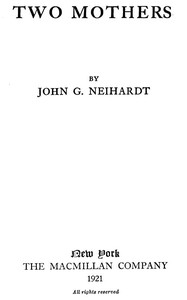
Two Mothers
Written by John G. Neihardt
Chaptra reads alongside you — AI insights, chapter breakdowns and reader discussions for every book. Join free
About this book
Reading guide
Themes, characters and key ideas in Two Mothers, written by Chaptra AI.
- about 8 hours
- advanced
- dark
- poignant
- tragic
John G. Neihardt's early 20th-century play, "Two Mothers," intricately weaves together two distinct yet thematically linked narratives exploring profound aspects of motherhood, loss, and moral conflict. One storyline follows a mother grappling with grief over her deceased son and a desire for wealth, leading her to confront her past and consider morally dubious actions after a weary traveler's visit. Interlaced with this is the story of Agrippina, mother of Nero, reflecting on her son's ascent to power amidst the treacherous Roman court. Both narratives highlight the immense sacrifices mothers make for their children, the darker facets of human nature, and the tragic consequences of ambition and choice, ultimately revealing a complex interplay of love and loss.
Key themes
- Motherhood and Sacrifice
- This is the central theme, exploring the profound and often extreme lengths mothers will go to for their children. It delves into the protective instincts, the desires for their children's well-being or advancement, and the personal costs incurred.
- Moral Conflict and Ambition
- This theme examines the internal struggles characters face when their desires (for wealth, power, or their children's success) clash with their ethical principles. It highlights the temptations to compromise one's morals for perceived gains.
- Loss and Grief
- The play deeply explores the emotional devastation caused by loss, particularly the death of a child, and how it can profoundly influence subsequent decisions and moral compass.
Worth discussing
How does the play's dual narrative structure enhance or complicate its central themes of motherhood and sacrifice?
Chapter-by-chapter breakdowns, character arcs and the full thematic analysis come with a free account.
Discussions
No one has started one yet
Questions this book opens up
No discussions yet
Be the first to start a discussion about this book!
Sign up to start the discussionReviews
No reviews yet
Be the first to review this book!