
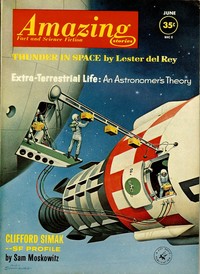
Thunder in space
Written by Lester Del Rey
Chaptra reads alongside you — AI insights, chapter breakdowns and reader discussions for every book. Join free
About this book
Read it with a club
Chaptra's science fiction and fantasy clubs — small groups reading the same books and talking as they go.


Sci-Fi That Got It Right (And Wrong)
Science fiction and fantasy
- 4 members
- 4 discussions
- Active Sep 11
Old science fiction, read against what actually happened. We keep score. This is a Chaptra house club — set up and moderated by us to get the conversation going. Open to everyone; jump in anywhere.
Read Thunder in space alongside people who are reading it too.
Also here: The Dragon Problem, Hard SF vs Soft SF
Chaptra Prime — paid clubs, every club feature, and unlimited reading support, for $5 a month or $60 once.
See PrimeReading guide
Themes, characters and key ideas in Thunder in space, written by Chaptra AI.
- about 8 hours
- intermediate
- tense
- suspenseful
- thought-provoking
Set during the intense Cold War era of the early 1960s, Lester Del Rey's "Thunder in Space" thrusts humanity into a new battlefield: orbit. The narrative centers on the American space station, the "Goddard," where protagonist Jerry Blane unexpectedly assumes command amidst escalating tensions after Soviet supply ships are destroyed. As nuclear radiation levels rise, threatening global catastrophe, Blane navigates political maneuvering and a race against time to avert disaster. The story culminates in a critical decision, highlighting the potential for unprecedented cooperation between rival nations and offering a fragile hope for peace in a world teetering on the brink of war.
“The threat wasn't just below us anymore; it was all around, a silent, invisible killer waiting to claim us all.”
Key themes
- Nuclear Arms Race and Cold War Paranoia
- The novel is deeply embedded in the anxieties of the Cold War, exploring the terrifying implications of the nuclear arms race as it extends into space. It vividly portrays the pervasive fear of mutual destruction and the constant suspicion between superpowers.
- International Cooperation vs. Conflict
- A central theme is the tension between ingrained nationalistic conflict and the imperative for international cooperation, especially when faced with an existential threat. The novel argues for transcending political divides for the greater good of humanity.
- Leadership in Crisis
- The narrative deeply explores the burdens and complexities of leadership, particularly when an ordinary individual is thrust into an unprecedented crisis. It examines the qualities needed to make difficult decisions under extreme pressure and uncertainty.
Worth discussing
How does Del Rey use the setting of space to amplify the themes of the Cold War?
Chapter-by-chapter breakdowns, character arcs and the full thematic analysis come with a free account.
Discussions
No one has started one yet
Questions this book opens up
No discussions yet
Be the first to start a discussion about this book!
Sign up to start the discussionReviews
No reviews yet
Be the first to review this book!