
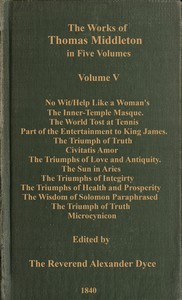
The works of Thomas Middleton, Volume 5 (of 5)
Written by Thomas Dekker,Thomas Middleton,William Rowley
Chaptra reads alongside you — AI insights, chapter breakdowns and reader discussions for every book. Join free
About this book
This work by Dekker, Thomas, Middleton, Thomas, Rowley, William offers readers a unique literary experience. The narrative explores themes of english drama.
Reading guide
Themes, characters and key ideas in The works of Thomas Middleton, Volume 5 (of 5), written by Chaptra AI.
- about 15 hours
- advanced
- dark
- satirical
- intense
This fifth and final volume of the collected works of Thomas Middleton, often featuring collaborations with Thomas Dekker and William Rowley, offers a deep dive into the rich and often dark landscape of Jacobean drama. As a compilation of plays, it showcases the authors' collective mastery of satire, tragedy, and social commentary, reflecting the moral complexities and urban realities of early 17th-century London. Readers encounter a diverse array of characters, from cunning villains and ambitious social climbers to virtuous but beleaguered figures, all navigating a world rife with corruption, desire, and the quest for justice. The volume serves as a crucial window into the theatrical and cultural concerns of the period, demonstrating the enduring power and relevance of these influential playwrights.
“As this is a volume of collected works, specific quotes are dependent on the individual plays included. However, readers can expect memorable lines that reveal character, satirize society, and articulate complex moral dilemmas, characteristic of Middleton's sharp wit and poetic language.”
Key themes
- Corruption and Morality
- This theme is central to almost all works by Middleton, Dekker, and Rowley. It explores the pervasive nature of corruption across all levels of society, from the highest echelons of power to the everyday dealings of citizens. The plays expose how greed, lust, and ambition lead to moral decay, illustrating the ease with which individuals compromise their ethics for personal gain. The theme questions the possibility of true justice in a corrupt world.
- Social Satire and Class
- The plays frequently employ sharp satire to critique the social pretensions, hypocrisy, and class distinctions of Jacobean London. They mock the newly rich, expose the folly of those aspiring beyond their station, and highlight the often-absurd rituals and values of different social strata. This theme provides both comedic relief and biting social commentary on the era's changing social landscape.
- Appearance vs. Reality
- Many characters in these plays maintain elaborate facades, masking their true intentions, desires, or moral corruption. This theme highlights the deceptive nature of human interaction and the difficulty of discerning truth from illusion. It explores how characters manipulate appearances to gain power, wealth, or sexual conquest, often leading to tragic consequences when the truth is eventually revealed.
Worth discussing
How do the collaborative works in this volume compare to the individual works of Middleton, Dekker, or Rowley? What unique qualities emerge from their joint efforts?
Chapter-by-chapter breakdowns, character arcs and the full thematic analysis come with a free account.
Discussions
No one has started one yet
Questions this book opens up
No discussions yet
Be the first to start a discussion about this book!
Sign up to start the discussionReviews
No reviews yet
Be the first to review this book!