
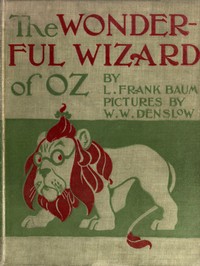
The Wonderful Wizard of Oz
Written by L. Frank (Lyman Frank) Baum
Chaptra reads alongside you — AI insights, chapter breakdowns and reader discussions for every book. Join free
About this book
Read it with a club
Chaptra's science fiction and fantasy clubs — small groups reading the same books and talking as they go.


Sci-Fi That Got It Right (And Wrong)
Science fiction and fantasy
- 4 members
- 4 discussions
- Active Sep 11
Old science fiction, read against what actually happened. We keep score. This is a Chaptra house club — set up and moderated by us to get the conversation going. Open to everyone; jump in anywhere.
Read The Wonderful Wizard of Oz alongside people who are reading it too.
Also here: The Dragon Problem, Hard SF vs Soft SF
Chaptra Prime — paid clubs, every club feature, and unlimited reading support, for $5 a month or $60 once.
See PrimeReading guide
Themes, characters and key ideas in The Wonderful Wizard of Oz, written by Chaptra AI.
- about 8 hours
- intermediate
- uplifting
- whimsical
- adventurous
L. Frank Baum's 'The Wonderful Wizard of Oz' transports young Dorothy Gale from the drab Kansas prairies to the vibrant, magical Land of Oz after a cyclone. Seeking a way home, she embarks on a perilous journey along the Yellow Brick Road to the Emerald City, where the enigmatic Wizard of Oz resides. Along the way, she befriends a Scarecrow longing for brains, a Tin Woodman desiring a heart, and a Cowardly Lion yearning for courage, each believing the Wizard holds the key to their desires. Their adventures are a testament to the power of friendship, self-discovery, and the realization that true capabilities often lie within oneself, not in external magic. The novel beautifully blends whimsy with profound lessons about identity and the meaning of home.
“"There's no place like home."”
Key themes
- Self-Discovery and Inherent Qualities
- This is the central theme, exploring how the characters' perceived deficiencies (lack of brains, heart, courage) are actually qualities they already possess. The journey to the Wizard is less about acquiring these traits and more about realizing they exist within themselves, often demonstrated through their actions on the quest.
- The Meaning of Home and Belonging
- Dorothy's singular motivation throughout the entire story is to return home to Kansas. Initially, 'home' represents a physical place of comfort and familiarity, however bleak. By the end, she understands that 'home' encompasses love, family, and a sense of belonging, making even a 'dreary' place preferable to a magical one without those connections.
- Illusion vs. Reality and the Nature of Authority
- The Wizard of Oz embodies this theme. He presents himself as a powerful, terrifying figure through elaborate illusions, yet he is ultimately revealed to be an ordinary man. This highlights how authority can be manufactured through perception and how what appears grand and powerful can be an illusion, challenging unquestioning belief in external figures.
Worth discussing
How does the concept of 'home' evolve for Dorothy throughout her journey, and what does she ultimately realize about it?
Chapter-by-chapter breakdowns, character arcs and the full thematic analysis come with a free account.
Discussions
No one has started one yet
Questions this book opens up
No discussions yet
Be the first to start a discussion about this book!
Sign up to start the discussionReviews
No reviews yet
Be the first to review this book!