
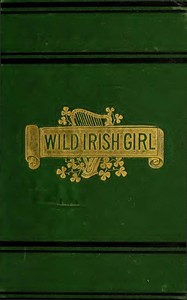
The Wild Irish Girl: A National Tale
Written by Lady (Sydney) Morgan
Chaptra reads alongside you — AI insights, chapter breakdowns and reader discussions for every book. Join free
About this book
Reading guide
Themes, characters and key ideas in The Wild Irish Girl: A National Tale, written by Chaptra AI.
- about 10 hours
- intermediate
- romantic
- reflective
- cultural
Lady Morgan's "The Wild Irish Girl: A National Tale" is an early 19th-century epistolary novel that chronicles the journey of Horatio M., a prejudiced English lord's son, to the remote Irish province of Connaught as a form of penance. Initially viewing Ireland and its inhabitants through a lens of inherited stereotypes, Horatio gradually undergoes a profound transformation as he encounters the captivating landscape, rich culture, and noble character of the Irish people, particularly the enigmatic Glorvina. The novel deftly weaves a romantic narrative with a didactic purpose, challenging prevailing Anglo-Irish prejudices and advocating for a more empathetic understanding of Irish identity and heritage. It stands as a significant work in the development of the 'national tale' genre, aiming to bridge cultural divides through personal experience and romantic idealism.
“"To understand Ireland, one must not merely see her, but feel her."”
Key themes
- Cultural Identity and Prejudice
- The novel directly confronts and challenges the prevailing English prejudices against the Irish, presenting Ireland as a land rich in history, culture, and noble character. It explores how inherited biases can blind individuals to truth and advocates for understanding through direct experience and empathy.
- Nationalism and Romanticism
- Lady Morgan employs Romantic ideals to construct a positive and often idealized vision of Irish national identity. She champions Ireland's unique cultural heritage, its ancient history, and its picturesque landscape, framing it as a land of poetic beauty and noble spirit, often in contrast to English industrialization or perceived moral decay.
- Transformation and Self-Discovery
- Central to the novel is Horatio's personal journey of transformation. His physical journey to Ireland mirrors an internal one, where he confronts his own biases, expands his worldview, and ultimately discovers a more compassionate and enlightened version of himself. His penance becomes a path to redemption and deeper understanding.
Worth discussing
How does the epistolary format influence the reader's understanding of Horatio's transformation and the cultural themes?
Chapter-by-chapter breakdowns, character arcs and the full thematic analysis come with a free account.
Discussions
No one has started one yet
Questions this book opens up
No discussions yet
Be the first to start a discussion about this book!
Sign up to start the discussionReviews
No reviews yet
Be the first to review this book!