
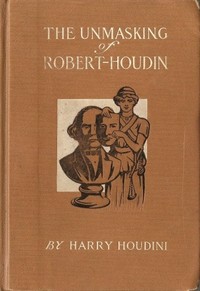
The Unmasking of Robert-Houdin
Written by Harry Houdini
Chaptra reads alongside you — AI insights, chapter breakdowns and reader discussions for every book. Join free
About this book
Reading guide
Themes, characters and key ideas in The Unmasking of Robert-Houdin, written by Chaptra AI.
- about 10 hours
- intermediate
- investigative
- disillusioned
- historical
Harry Houdini's "The Unmasking of Robert-Houdin" is a polemical historical account that challenges the revered status of Jean-Eugène Robert-Houdin, often considered the father of modern magic. Initially inspired by Robert-Houdin's memoirs, Houdini embarks on extensive research that ultimately leads to disillusionment. He meticulously details what he believes are numerous instances of historical inaccuracies and claims of originality by Robert-Houdin that were, in fact, borrowed from lesser-known predecessors. The book serves as Houdini's impassioned effort to revise the historical narrative of magic, aiming to acknowledge the true innovators and set the record straight regarding Robert-Houdin's actual contributions and alleged plagiarisms. It is a work of historical revisionism driven by a commitment to accuracy and a desire to honor forgotten figures in the magical arts.
“"My interest in Robert-Houdin was first awakened by his admirable Memoirs, which I read at an early age. I was fascinated by the charm of his writing and by the wonderful originality of his inventions."”
Key themes
- Historical Revisionism and the Pursuit of Truth
- This is the central theme, as Houdini's entire project is dedicated to correcting what he perceives as historical inaccuracies in the narrative of magic. He meticulously researches and presents evidence to challenge the accepted wisdom surrounding Robert-Houdin, arguing for a more accurate and comprehensive understanding of magic's lineage. The book explores the difficulty and importance of uncovering historical truth, especially when it challenges cherished myths.
- Intellectual Property, Originality, and Plagiarism
- The book delves deeply into questions of who truly invents a magic trick or concept, and how credit should be assigned. Houdini argues that Robert-Houdin frequently presented others' inventions as his own, raising ethical concerns about intellectual property in a field where ideas are often adapted and secrets are paramount. It explores the fine line between influence, adaptation, and outright theft of ideas.
- Legacy and Reputation
- Houdini's book is an examination of how a public figure's legacy is constructed, maintained, and challenged. Robert-Houdin carefully cultivated his image through his memoirs, and Houdini aims to dismantle that carefully crafted reputation. The theme explores the fragility of reputation, the power of narrative in shaping historical perception, and the enduring impact of a person's actions on their posthumous image.
Worth discussing
To what extent should we scrutinize the historical claims of figures we admire or who are considered foundational in their fields?
Chapter-by-chapter breakdowns, character arcs and the full thematic analysis come with a free account.
Discussions
No one has started one yet
Questions this book opens up
No discussions yet
Be the first to start a discussion about this book!
Sign up to start the discussionReviews
No reviews yet
Be the first to review this book!