
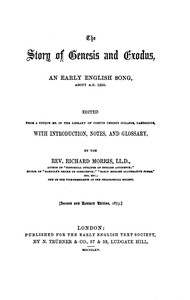
The Story of Genesis and Exodus: An Early English Song, about 1250 A.D.
Written by Unknown author
Chaptra reads alongside you — AI insights, chapter breakdowns and reader discussions for every book. Join free
About this book
Reading guide
Themes, characters and key ideas in The Story of Genesis and Exodus: An Early English Song, about 1250 A.D., written by Chaptra AI.
- about 20 hours
- advanced
- epic
- didactic
- reverent
An anonymous Middle English poem from around 1250 A.D., "The Story of Genesis and Exodus" is a significant early vernacular retelling of the foundational biblical narratives. Comprising over 4,000 lines, it meticulously recounts the stories from the creation of the world through the life of Moses and the Israelites' escape from Egypt, drawing primarily from the Vulgate Bible. Its primary purpose was didactic, making complex theological narratives accessible to a broader, non-Latin-speaking audience in medieval England. The poem serves as a crucial historical and linguistic artifact, showcasing early English literary style and the pervasive influence of Christian scripture.
“In biginninge made god of noht / Hevene and erthe, and al that woht.”
Key themes
- Divine Providence and Sovereignty
- This theme highlights God's ultimate control over all events and His active intervention in human history. From creation to the Exodus, every major event is attributed to God's will and plan, demonstrating His power and purpose.
- Sin, Disobedience, and Consequences
- The poem consistently explores the theme that disobedience to God's commands leads to severe consequences. The Fall of Man, the Flood, and the destruction of Sodom and Gomorrah serve as stark warnings, emphasizing the moral order of the universe.
- Covenant and Promise
- A central theological theme, the poem illustrates God's establishment of solemn agreements (covenants) with humanity, particularly with Noah and Abraham, promising protection, descendants, and land in exchange for obedience and faith. These promises drive much of the narrative.
Worth discussing
How does the poem's didactic purpose shape its narrative choices and character portrayals?
Chapter-by-chapter breakdowns, character arcs and the full thematic analysis come with a free account.
Discussions
No one has started one yet
Questions this book opens up
No discussions yet
Be the first to start a discussion about this book!
Sign up to start the discussionReviews
No reviews yet
Be the first to review this book!