
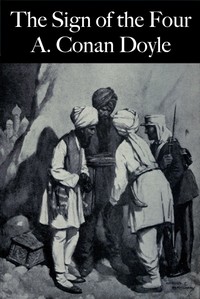
The Sign of the Four
Written by Arthur Conan Doyle
Chaptra reads alongside you — AI insights, chapter breakdowns and reader discussions for every book. Join free
About this book
Read it with a club
Chaptra's mystery and crime clubs — small groups reading the same books and talking as they go.


Whodunit Wednesdays
Mystery and crime
- 4 members
- 4 discussions
- Active Sep 11
One mystery a fortnight. We stop at the reveal, everyone posts their accusation, and then we read on together. This is a Chaptra house club — set up and moderated by us to get the conversation going. Open to everyone; jump in anywhere.
Read The Sign of the Four alongside people who are reading it too.
Chaptra Prime — paid clubs, every club feature, and unlimited reading support, for $5 a month or $60 once.
See PrimeReading guide
Themes, characters and key ideas in The Sign of the Four, written by Chaptra AI.
- about 7 hours
- intermediate
- mysterious
- thrilling
- dark
In Arthur Conan Doyle's second Sherlock Holmes novel, Dr. Watson introduces Mary Morstan, a governess seeking Holmes's help regarding her father's mysterious disappearance and the anonymous delivery of valuable pearls. This leads Holmes, Watson, and Morstan into a complex web involving a fabulous Indian treasure, a dark pact made during the Sepoy Mutiny, and a series of murders committed by an ex-convict and his indigenous accomplice. The investigation culminates in a thrilling chase down the Thames, uncovering a story of greed, betrayal, and the enduring consequences of colonial-era injustices, ultimately leading to a romantic development for Dr. Watson.
“"Data! Data! Data! I can't make bricks without clay."”
Key themes
- Greed and its Destructive Power
- The novel vividly demonstrates how the pursuit and possession of wealth, particularly the 'Agra treasure,' corrupts individuals and leads to violence, betrayal, and misery. Every character who comes into contact with the treasure suffers, highlighting its 'cursed' nature.
- Colonialism and its Aftermath
- The story's very foundation is rooted in the British Empire's presence in India, specifically during the Sepoy Mutiny. The Agra treasure itself is a product of colonial exploitation and violence, and the characters involved (Small, Sholto, Morstan) are all shaped by their experiences in the colonies, highlighting the moral ambiguities and lasting consequences of imperial power.
- Justice vs. Revenge
- The novel explores the blurred lines between seeking justice and enacting revenge. Jonathan Small sees himself as a wronged man seeking his rightful share and retribution for betrayal, while his actions are undeniably criminal. This raises questions about the nature of fairness and the morality of personal vengeance.
Worth discussing
How does the narrative perspective of Dr. Watson influence our perception of Sherlock Holmes and the events of the story?
Chapter-by-chapter breakdowns, character arcs and the full thematic analysis come with a free account.
Discussions
No one has started one yet
Questions this book opens up
No discussions yet
Be the first to start a discussion about this book!
Sign up to start the discussionReviews
No reviews yet
Be the first to review this book!