
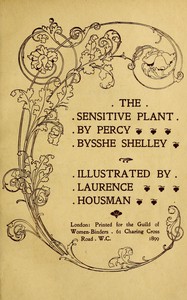
The sensitive plant
Written by Percy Bysshe Shelley
Chaptra reads alongside you — AI insights, chapter breakdowns and reader discussions for every book. Join free
About this book
Reading guide
Themes, characters and key ideas in The sensitive plant, written by Chaptra AI.
- about 8 hours
- advanced
- melancholy
- lyrical
- philosophical
Percy Bysshe Shelley's 'The Sensitive Plant' is a lyrical poem exploring the ephemeral nature of beauty, love, and life itself through the allegory of a delicate plant and its relationship with a nurturing lady. Set in an idyllic garden, the poem vividly depicts the flourishing of nature under the lady's benevolent care, symbolizing an ideal state of existence. However, the narrative shifts to a poignant exploration of decay and loss following the lady's death, as the garden withers and the plant disappears. Ultimately, Shelley uses this cycle to contemplate the enduring essence of beauty and spirit beyond physical demise, questioning the reality of death and the persistence of memory and love.
“A Sensitive Plant in a garden grew,”
Key themes
- Beauty and Transience
- The poem centrally explores the exquisite but fleeting nature of beauty. The Sensitive Plant itself, along with the flourishing garden, represents an ideal of beauty that is inherently vulnerable to time and change. Shelley contrasts this ephemeral physical beauty with the potential for beauty to persist in memory or spirit.
- Mortality and Decay
- Shelley confronts the inevitability of death and decay, not just for living beings but for entire ecosystems and states of idealized existence. The Lady's death acts as a catalyst for the garden's ruin, starkly illustrating how life and beauty are intertwined with their eventual demise. The poem questions the ultimate meaning of this decay.
- Idealism vs. Reality
- Shelley, a quintessential Romantic idealist, presents a vivid contrast between an imagined, perfect world and the harsh realities of existence. The flourishing garden under the Lady's care represents an ideal, almost utopian state, while its subsequent decay embodies the inevitable intrusion of suffering, loss, and imperfection into that ideal.
Worth discussing
How does Shelley use the allegory of the Sensitive Plant and the Lady to explore themes of beauty and transience?
Chapter-by-chapter breakdowns, character arcs and the full thematic analysis come with a free account.
Discussions
No one has started one yet
Questions this book opens up
No discussions yet
Be the first to start a discussion about this book!
Sign up to start the discussionReviews
No reviews yet
Be the first to review this book!