
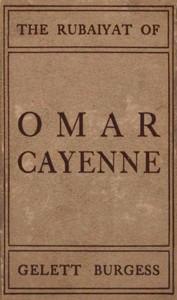
The Rubaiyat of Omar Cayenne
Written by Gelett Burgess
Chaptra reads alongside you — AI insights, chapter breakdowns and reader discussions for every book. Join free
About this book
Read it with a club
Chaptra's poetry and plays clubs — small groups reading the same books and talking as they go.


Shakespeare Out Loud
Poetry and plays
- 4 members
- 4 discussions
- Active Sep 11
Plays are scripts, not novels. We read them aloud, in parts, and it changes everything. This is a Chaptra house club — set up and moderated by us to get the conversation going. Open to everyone; jump in anywhere.
Read The Rubaiyat of Omar Cayenne alongside people who are reading it too.
Chaptra Prime — paid clubs, every club feature, and unlimited reading support, for $5 a month or $60 once.
See PrimeReading guide
Themes, characters and key ideas in The Rubaiyat of Omar Cayenne, written by Chaptra AI.
- about 8 hours
- intermediate
- humorous
- satirical
- reflective
Gelett Burgess's "The Rubaiyat of Omar Cayenne" is a brilliant early 20th-century satirical poem that ingeniously parodies Edward FitzGerald's famous translation of Omar Khayyam. Through a series of witty quatrains, Burgess critiques the burgeoning modern literary landscape, the commercial pressures of the publishing industry, and the perennial struggles faced by authors. The poem humorously navigates the tension between artistic integrity and commercial success, often lamenting the proliferation of mediocre literature and the fickle nature of critical and public reception. It serves as both a sharp critique of contemporary literary trends and an empathetic, often absurd, celebration of the writing life itself, capturing the essence of authorial frustration with an engaging, humorous tone.
“A Book of Verses underneath the Bough, A Loaf of Bread, a Flask of Wine, and Thou Beside me singing in the Wilderness— Ah, Wilderness were Paradise enow!”
Key themes
- Authorial Struggles and Frustrations
- This central theme delves into the myriad difficulties faced by writers, from the creative block and the arduous process of writing to the anxieties of publication, the sting of negative criticism, and the elusive nature of lasting recognition. Burgess captures the often-solitary and unrewarding nature of the author's life, highlighting the emotional toll of pouring one's soul into work that may be ignored or misunderstood.
- The Commercialization of Art
- This theme explores the tension between creating art for intrinsic value and the pressure to produce works that sell. Burgess critiques how the publishing industry often prioritizes commercial viability over artistic merit, leading to a proliferation of shallow or formulaic literature. He laments the necessity for authors to cater to public taste or marketing trends, often at the expense of their creative vision.
- Critique of Modern Literature and Fickle Tastes
- Burgess uses the poem to satirize the perceived decline in literary quality and the arbitrary nature of public and critical tastes in his era. He implicitly criticizes superficial trends, the sheer volume of mediocre publications, and the tendency for readers and critics to embrace novelty over substance. This theme explores the challenges of discerning genuine literary merit amidst a chaotic and rapidly changing cultural landscape.
Worth discussing
How does Burgess's parody of 'The Rubaiyat of Omar Khayyam' enhance his critique of the literary world? What is the significance of choosing this specific text to parody?
Chapter-by-chapter breakdowns, character arcs and the full thematic analysis come with a free account.
Discussions
No one has started one yet
Questions this book opens up
No discussions yet
Be the first to start a discussion about this book!
Sign up to start the discussionReviews
No reviews yet
Be the first to review this book!