
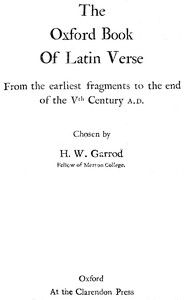
The Oxford Book of Latin Verse: From the earliest fragments to the end of the Vth Century A.D.
Written by Unknown author
Chaptra reads alongside you — AI insights, chapter breakdowns and reader discussions for every book. Join free
About this book
Reading guide
Themes, characters and key ideas in The Oxford Book of Latin Verse: From the earliest fragments to the end of the Vth Century A.D., written by Chaptra AI.
- about 8 hours
- advanced
- philosophical
- epic
- lyrical
The Oxford Book of Latin Verse is a monumental anthology presenting a comprehensive survey of Latin poetry from its earliest extant fragments in the 3rd century BCE through to the end of the 5th century CE. It meticulously collects works from legendary poets like Virgil, Horace, Catullus, Ovid, and Lucretius, alongside lesser-known but historically significant writers. This collection serves as an indispensable resource for scholars and students, showcasing the evolution of Latin poetic forms, themes, and linguistic nuances across a millennium. It offers a panoramic view of Roman thought, culture, and literary artistry, making the vast and rich tradition of Latin verse accessible to a modern audience.
“Carpe diem, quam minimum credula postero. (Seize the day, trusting as little as possible in tomorrow.) - Horace”
Key themes
- War, Empire, and National Identity
- A foundational theme, particularly in epic poetry, reflecting Rome's martial history and imperial ambitions. It examines the glory and tragedy of warfare, the burden of leadership, the concept of Roman destiny (fatum), and the sacrifices required to build and maintain an empire. This theme often intertwines with ideas of pietas (duty) and virtus (manliness, excellence).
- Love and Desire (Eros)
- Explored across various poets, from Catullus's raw passion and heartbreak for Lesbia, to Ovid's sophisticated and often cynical advice on seduction, and Virgil's tragic depiction of Dido's love for Aeneas. This theme delves into the spectrum of human emotion, from intense joy to profound sorrow, infidelity, and the societal implications of desire.
- Mortality and the Passage of Time
- A pervasive theme that grapples with the fleeting nature of human life, the inevitability of death, and the desire for immortality (either through fame, legacy, or philosophical acceptance). Poets often urge readers to 'seize the day' (carpe diem) or to find solace in philosophy against the anxieties of existence.
Worth discussing
How does the chronological arrangement of the anthology illuminate the evolution of Latin language and poetic forms?
Chapter-by-chapter breakdowns, character arcs and the full thematic analysis come with a free account.
Discussions
No one has started one yet
Questions this book opens up
No discussions yet
Be the first to start a discussion about this book!
Sign up to start the discussionReviews
No reviews yet
Be the first to review this book!