
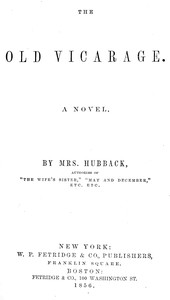
The old vicarage : $b A novel
Written by Mrs. (Catherine-Anne Austen) Hubback
Chaptra reads alongside you — AI insights, chapter breakdowns and reader discussions for every book. Join free
About this book
Reading guide
Themes, characters and key ideas in The old vicarage : $b A novel, written by Chaptra AI.
- about 9 hours
- intermediate
- romantic
- thought-provoking
- gentle
Catherine-Anne Hubback's "The Old Vicarage" is a charming domestic novel that follows the trials and romantic entanglements of Miss Jane Herbert and her family after they are forced to move to a modest old vicarage due to financial reversals. Jane, a sensible and virtuous young woman, navigates the complexities of Victorian society, encountering various suitors and social prejudices. The narrative delves into themes of class, duty, genuine affection versus superficial charm, and the importance of moral character in securing happiness and a suitable marriage. It offers a gentle yet insightful look into the domestic sphere and the challenges faced by women in the mid-19th century.
“"It is not the grand house, but the good heart that makes a home truly rich."”
Key themes
- Virtue vs. Superficiality
- A central theme is the discernment between outward charm and genuine moral character. The novel champions inner goodness, integrity, and steady principles over attractive appearances, social graces, or fleeting passions, especially in the context of romantic relationships and marriage.
- Social Class and Financial Ruin
- The novel directly addresses the precariousness of social standing and the profound impact of financial loss on a family, particularly on the marriage prospects of young women. It explores the prejudices faced by those who have 'come down in the world' and the resilience required to maintain dignity.
- Marriage and Social Duty
- Marriage is presented as a crucial institution for women, often tied to financial security and social standing, but the novel emphasizes that a successful marriage must be founded on mutual respect, affection, and shared moral principles, not just convenience or ambition. It explores the duties involved in choosing a partner.
Worth discussing
How does the change in the Herbert family's financial status affect their social standing and individual characters?
Chapter-by-chapter breakdowns, character arcs and the full thematic analysis come with a free account.
Discussions
No one has started one yet
Questions this book opens up
No discussions yet
Be the first to start a discussion about this book!
Sign up to start the discussionReviews
No reviews yet
Be the first to review this book!