
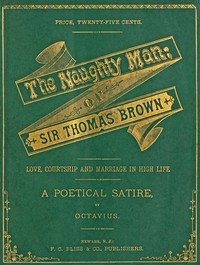
The Naughty Man; or, Sir Thomas Brown: Love, Courtship and Marriage in High Life. A Poetical Satire
Written by Frank Chapman Bliss
Chaptra reads alongside you — AI insights, chapter breakdowns and reader discussions for every book. Join free
About this book
Reading guide
Themes, characters and key ideas in The Naughty Man; or, Sir Thomas Brown: Love, Courtship and Marriage in High Life. A Poetical Satire, written by Chaptra AI.
- about 8 hours
- intermediate
- humorous
- satirical
- romantic
Frank Chapman Bliss's "The Naughty Man; or, Sir Thomas Brown" is a late 19th-century poetical satire that humorously critiques societal norms surrounding love, age, and wealth in high society. The story centers on Sir Thomas Brown, an octogenarian millionaire who defies his greedy adult children by eloping with the charming widow Ruth. This unconventional union sparks scandal and accusations of insanity, with many believing Ruth is merely after his fortune. However, Sir Thomas cleverly asserts his mental acuity and the legitimacy of his love by drafting a new will, disinheriting his skeptical heirs and affirming his choice. The work ultimately champions genuine affection over conventional expectations and materialistic concerns.
“"Though years may silver hair and dim the eye, / True love's bright flame can never truly die."”
Key themes
- Love and Age
- This theme explores the idea that genuine affection and the capacity for love are not limited by age. It challenges societal prejudices and stereotypes that often dismiss romance between elderly individuals, especially when a significant age gap is involved. The book celebrates the notion that love can blossom at any stage of life, transcending conventional expectations.
- Societal Norms and Expectations
- The book critiques the rigid and often hypocritical social norms of high society, particularly concerning marriage, wealth, and appropriate behavior for the elderly. It highlights how public opinion and family expectations can stifle individual happiness and autonomy, especially when unconventional choices are made.
- Greed and Inheritance
- This theme exposes the corrupting influence of wealth and the pursuit of inheritance on family relationships. It illustrates how financial motivations can override genuine affection and lead to selfish, manipulative behavior, turning family members into antagonists.
Worth discussing
How does 'The Naughty Man' challenge or reinforce societal views on aging and love in the late 19th century?
Chapter-by-chapter breakdowns, character arcs and the full thematic analysis come with a free account.
Discussions
No one has started one yet
Questions this book opens up
No discussions yet
Be the first to start a discussion about this book!
Sign up to start the discussionReviews
No reviews yet
Be the first to review this book!