
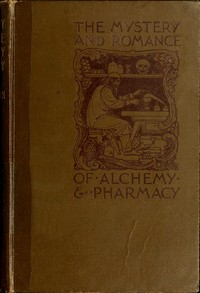
The Mystery and Romance of Alchemy and Pharmacy
Written by C. J. S. (Charles John Samuel) Thompson
Chaptra reads alongside you — AI insights, chapter breakdowns and reader discussions for every book. Join free
About this book
Reading guide
Themes, characters and key ideas in The Mystery and Romance of Alchemy and Pharmacy, written by Chaptra AI.
- about 12 hours
- advanced
- historical
- informative
- scholarly
C. J. S. Thompson's "The Mystery and Romance of Alchemy and Pharmacy" is a compelling late 19th-century historical account that meticulously chronicles the intertwined evolution of alchemy and pharmacy from antiquity through the 18th century. The work explores the fascinating transition from ancient healing practices, often steeped in magic and superstition, to the nascent empirical methods that laid the foundation for modern science. Thompson adeptly illustrates how various civilizations, from Egypt and China to Greece and Rome, contributed to this rich tapestry of medical and proto-scientific knowledge. It serves as an illuminating journey through humanity's enduring quest for understanding the body, disease, and the transformative power of substances, highlighting the blend of curiosity, error, and discovery that defined these early disciplines.
“From the earliest dawn of civilization, man has sought to alleviate suffering, a quest that gave birth to both the mystical art of alchemy and the practical science of pharmacy.”
Key themes
- The Evolution of Scientific Thought
- This theme explores how human understanding of the natural world and the human body gradually shifted from supernatural explanations and mystical practices to empirical observation, experimentation, and systematic reasoning. Thompson illustrates the slow, often circuitous path from early 'magical' remedies to the foundations of modern chemistry and pharmacology, highlighting the incremental nature of scientific progress.
- The Interplay of Science and Superstition
- Thompson meticulously details how for centuries, the lines between scientific inquiry and superstitious belief were blurred. Alchemy and early pharmacy often integrated astrological influences, incantations, and mystical symbols alongside practical experimentation. This theme examines how these seemingly contradictory elements coexisted and, at times, even propelled discovery by inspiring investigations into the unknown, ultimately leading to their gradual separation as empirical methods gained dominance.
- The Human Quest for Healing and Immortality
- At its core, the book explores humanity's enduring and fundamental desire to alleviate suffering, cure disease, and extend life. This quest drove both the practical development of pharmacy and the more esoteric pursuits of alchemy, such as the search for the elixir of life. Thompson illustrates how this deep-seated human motivation fueled countless experiments, observations, and theoretical developments, regardless of the immediate success or failure of specific endeavors.
Worth discussing
How does Thompson's late 19th-century perspective influence his interpretation of historical events and scientific progress?
Chapter-by-chapter breakdowns, character arcs and the full thematic analysis come with a free account.
Discussions
No one has started one yet
Questions this book opens up
No discussions yet
Be the first to start a discussion about this book!
Sign up to start the discussionReviews
No reviews yet
Be the first to review this book!