
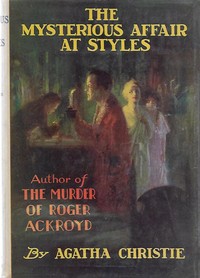
The Mysterious Affair at Styles
Written by Agatha Christie
Chaptra reads alongside you — AI insights, chapter breakdowns and reader discussions for every book. Join free
About this book
Read it with a club
Chaptra's mystery and crime clubs — small groups reading the same books and talking as they go.


Whodunit Wednesdays
Mystery and crime
- 4 members
- 4 discussions
- Active Sep 11
One mystery a fortnight. We stop at the reveal, everyone posts their accusation, and then we read on together. This is a Chaptra house club — set up and moderated by us to get the conversation going. Open to everyone; jump in anywhere.
Read The Mysterious Affair at Styles alongside people who are reading it too.
Chaptra Prime — paid clubs, every club feature, and unlimited reading support, for $5 a month or $60 once.
See PrimeReading guide
Themes, characters and key ideas in The Mysterious Affair at Styles, written by Chaptra AI.
- about 7 hours
- intermediate
- mysterious
- suspenseful
- intriguing
Agatha Christie's debut novel, "The Mysterious Affair at Styles," introduces the eccentric Belgian detective Hercule Poirot as he investigates the poisoning of a wealthy matriarch, Emily Inglethorp, at her country estate during World War I. Narrated by Captain Arthur Hastings, a convalescing soldier and old friend of Poirot, the story plunges into a complex web of family tensions, greed, and suspicion surrounding Mrs. Inglethorp's recent marriage to a much younger man, Alfred. As Poirot meticulously examines every detail and interviews the various residents of Styles Court, including Mrs. Inglethorp's stepchildren and their spouses, he uncovers a meticulously planned murder scheme hidden beneath a facade of domestic discord. The novel masterfully employs red herrings and intricate clues, challenging both Hastings and the reader to discern the truth from the numerous false leads. Ultimately, Poirot's 'little grey cells' expose the cunning killer and the ingenious method used to commit the seemingly impossible crime.
“"The man who is a fool, and knows it, is not a fool at all."”
Key themes
- The Power of Observation and Deduction
- This is the cornerstone of Hercule Poirot's methodology. The novel champions the idea that truth is found not through brute force or obvious clues, but through meticulous observation of the smallest details and rigorous logical deduction, often against prevailing assumptions.
- Deception and Appearance vs. Reality
- This theme is central to the entire mystery, as every character presents a façade or harbors secrets. Poirot's genius lies in seeing beyond these appearances to the underlying truth. The killer's entire plan relies on manipulating perceptions and creating false impressions.
- Greed and Inheritance
- The primary motive for the murder is financial gain. Emily Inglethorp's considerable fortune and her recent marriage to a man perceived as a fortune-hunter create intense family friction, highlighting how wealth can corrupt relationships and drive individuals to extreme acts.
Worth discussing
How does Captain Hastings' narration influence the reader's perception of the events and suspects? Is he a reliable narrator?
Chapter-by-chapter breakdowns, character arcs and the full thematic analysis come with a free account.
Discussions
No one has started one yet
Questions this book opens up
No discussions yet
Be the first to start a discussion about this book!
Sign up to start the discussionReviews
No reviews yet
Be the first to review this book!