
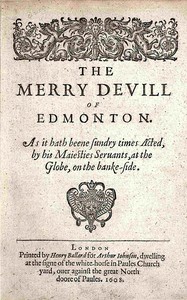
The Merry Devil of Edmonton
Written by Shakespeare (spurious and doubtful works)
Chaptra reads alongside you — AI insights, chapter breakdowns and reader discussions for every book. Join free
About this book
Reading guide
Themes, characters and key ideas in The Merry Devil of Edmonton, written by Chaptra AI.
- about 8 hours
- intermediate
- humorous
- romantic
- magical
"The Merry Devil of Edmonton," a comedic play of uncertain authorship often attributed to Shakespeare's doubtful works, unfolds in Elizabethan England, blending themes of love, magic, and social convention. The narrative centers on Peter Fabell, a scholar with a magical pact, who uses his abilities to aid young lovers Milliscent and Raymond Mounchensey against the backdrop of an arranged marriage. Through a series of witty deceptions and supernatural interventions, Fabell navigates his own spiritual dilemma while orchestrating a triumph of true love over familial duty. The play charmingly depicts the societal norms and romantic entanglements of the era, culminating in a resolution where wit and affection ultimately sway authority.
“"For this night, sir, the devil in his best array / Stands on the threshold, waiting for your day."”
Key themes
- Love vs. Duty
- This theme explores the conflict between personal romantic desire and societal or familial obligations, particularly concerning arranged marriages. Milliscent's struggle to choose between her heart's desire (Raymond) and her father's arranged match (Frank) is central to the plot. The play ultimately champions the triumph of true love over imposed duty, suggesting that genuine affection should supersede social conventions.
- Magic and Deception
- The theme of magic, embodied by Peter Fabell, serves as a primary driver of the plot and source of much of the comedy. Fabell's powers are used for benevolent deception, creating illusions and orchestrating events to aid the lovers. This explores the idea of whether 'good' can come from potentially 'dark' means (Fabell's pact) and how wit and illusion can shape reality.
- Appearance vs. Reality
- This theme is explored through the numerous instances of mistaken identity, disguise, and magical illusion. Characters are often not what they seem, and situations are frequently manipulated to appear different from their true nature. This creates comedic irony and highlights the fluidity of perception, suggesting that what appears to be true can be cleverly altered.
Worth discussing
How does Peter Fabell's magical pact influence the play's comedic tone and resolution, rather than creating a darker narrative?
Chapter-by-chapter breakdowns, character arcs and the full thematic analysis come with a free account.
Discussions
No one has started one yet
Questions this book opens up
No discussions yet
Be the first to start a discussion about this book!
Sign up to start the discussionReviews
No reviews yet
Be the first to review this book!