
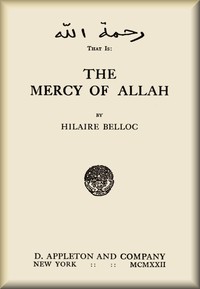
The Mercy of Allah
Written by Hilaire Belloc
Chaptra reads alongside you — AI insights, chapter breakdowns and reader discussions for every book. Join free
About this book
Reading guide
Themes, characters and key ideas in The Mercy of Allah, written by Chaptra AI.
- about 7 hours
- intermediate
- philosophical
- humorous
- reflective
Hilaire Belloc's "The Mercy of Allah" is an allegorical narrative set in Baghdad during the time of Abd-er-Rahman, following the life of the wealthy merchant Mahmoud. Through a series of recounted adventures shared with his seven nephews, Mahmoud reflects on his journey from poverty to immense riches, attributing his success not solely to his own efforts but profoundly to "the Mercy of Allah." The book blends philosophical reflections on wealth, fate, and personal accountability with a satirical edge, exploring how human greed and perception often obscure the true sources of fortune and misfortune. It serves as a moral fable, using Mahmoud's experiences to impart timeless lessons about humility, providence, and the transient nature of worldly possessions. The narrative promises both humor and deeper insights into the human condition and its relationship with divine will.
“"True wealth is not merely what one accumulates, but what one understands of its source and its purpose."”
Key themes
- The Nature of Wealth and Materialism
- The book deeply explores the true nature of wealth, questioning whether it is merely accumulated possessions or something more profound. It critiques the dangers of materialism, portraying wealth as a test of character rather than an end in itself. Mahmoud's journey illustrates how the pursuit of riches can blind one to deeper truths and how true contentment often comes from understanding wealth's ephemeral quality.
- Divine Providence vs. Human Agency
- A central theme is the interplay between human effort and divine will. Mahmoud initially believes his success is due to his own cunning or random luck, but through repeated experiences, he comes to understand that an overarching 'Mercy of Allah' guides his fortunes. This theme questions the extent of free will and personal responsibility versus the predetermined path set by a higher power, without negating the importance of virtuous action.
- Greed and Humility
- The narrative vividly portrays the corrupting influence of greed and contrasts it with the liberating power of humility. Mahmoud's early life is marked by instances where his avarice leads him astray or causes suffering. His journey is one of learning to temper his desires and recognize the value of contentment and gratitude over endless acquisition. Humility is presented as a prerequisite for true wisdom and a balanced life.
Worth discussing
How does Mahmoud's understanding of 'fortune' evolve throughout his life story, and what causes these shifts?
Chapter-by-chapter breakdowns, character arcs and the full thematic analysis come with a free account.
Discussions
No one has started one yet
Questions this book opens up
No discussions yet
Be the first to start a discussion about this book!
Sign up to start the discussionReviews
No reviews yet
Be the first to review this book!