
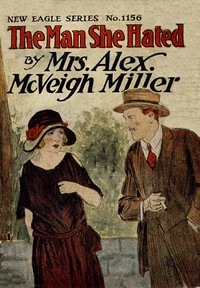
The man she hated : $b or, Won by strategy
Written by Alex. McVeigh Miller
Chaptra reads alongside you — AI insights, chapter breakdowns and reader discussions for every book. Join free
About this book
Reading guide
Themes, characters and key ideas in The man she hated : $b or, Won by strategy, written by Chaptra AI.
- about 8 hours
- beginner
- romantic
- dramatic
- suspenseful
Mrs. Alex McVeigh Miller's late 19th-century novel, "The Man She Hated: or, Won by Strategy," plunges into the tumultuous life of Fairfax Fielding, a factory girl entangled in a web of love, societal expectations, and cruel manipulation. Initially introduced grappling with her conflicted feelings for the wealthy Waverley Osborne, Fair's life takes a dramatic turn when she becomes the target of Miss Platt's jealous machinations. Despite a heroic rescue by Bayard Lorraine, Fair is ultimately forced into a disastrous marriage with Carl Bernicci, a consequence of Miss Platt's vengeful plot. The narrative explores themes of social class, female agency, and the deceptive nature of appearances, setting the stage for Fair's poignant journey through betrayal and the quest for self-identity.
“"I hate him! I despise Waverley Osborne, and I will never marry him!" (Illustrative of Fair's initial declaration)”
Key themes
- Manipulation and Betrayal
- Central to the plot, this theme explores the destructive power of strategic deceit and personal betrayal. Miss Platt's character embodies this theme, as her jealousy drives her to meticulously plan and execute a scheme that leads to Fair's forced marriage. The narrative delves into the psychological toll of being a victim of such machinations and the moral implications of using others as pawns.
- Societal Expectations and Class
- The novel vividly portrays the rigid class structure of late 19th-century America, contrasting Fair's life as a factory girl with the wealth and influence of characters like Waverley Osborne and Bayard Lorraine. This theme explores how social status dictates opportunities, limits personal freedom, and shapes relationships, particularly for women. Fair's forced marriage underscores the vulnerability of lower-class women to the machinations of those with more power or social standing.
- Female Agency vs. Constraint
- This theme critically examines the limited agency afforded to women in the late 19th century, particularly those of Fair's social standing. Fair's inability to control her own romantic life, her vulnerability to forced marriage, and her struggle against external forces highlight the societal constraints placed upon women. The narrative implicitly, and sometimes explicitly, questions the extent to which women could truly determine their own destinies.
Worth discussing
How does Mrs. Alex McVeigh Miller use the 'dime novel' format to explore complex social issues of the late 19th century?
Chapter-by-chapter breakdowns, character arcs and the full thematic analysis come with a free account.
Discussions
No one has started one yet
Questions this book opens up
No discussions yet
Be the first to start a discussion about this book!
Sign up to start the discussionReviews
No reviews yet
Be the first to review this book!