
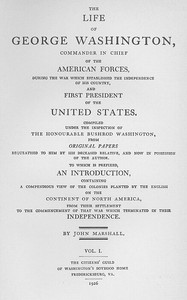
The Life of George Washington, Vol. 1: Commander in Chief of the American Forces During the War; which Established the Independence of his Country and First; President of the United States
Written by John Marshall
Chaptra reads alongside you — AI insights, chapter breakdowns and reader discussions for every book. Join free
About this book
Reading guide
Themes, characters and key ideas in The Life of George Washington, Vol. 1: Commander in Chief of the American Forces During the War; which Established the Independence of his Country and First; President of the United States, written by Chaptra AI.
- about 25 hours
- advanced
- informative
- historical
- patriotic
John Marshall's "The Life of George Washington, Vol. 1" offers an extensive early 19th-century biographical account of the nascent American nation's pivotal leader. This volume meticulously chronicles Washington's life from his formative years through his appointment as Commander-in-Chief of the Continental Army and the initial stages of the Revolutionary War. Marshall, a contemporary and admirer, presents a detailed narrative of Washington's military strategies, political acumen, and unyielding leadership during the struggle for independence. The work also provides significant historical context, elucidating the broader political landscape and events that culminated in the establishment of the United States. It serves as a foundational text in American historiography, shaping the early public perception of Washington's character and legacy.
“"The love of liberty, though a common sentiment, was the animating soul of the American people."”
Key themes
- Leadership and Virtue
- Marshall consistently emphasizes Washington's moral character—his integrity, prudence, and self-sacrifice—as fundamental to his effective leadership. The book argues that a virtuous leader is essential for the success and stability of a republic, particularly during its foundational struggles. Washington is presented as the embodiment of civic virtue, whose personal qualities were inseparable from his public achievements.
- Nation-Building and Independence
- The book meticulously details the historical events leading to the American Revolution and the establishment of the United States, framing Washington's life within the larger narrative of national birth. It explores the struggle for independence not just as a military conflict but as a profound act of political creation, emphasizing the precariousness and ultimate triumph of the American experiment.
- The Burden of Command
- Marshall subtly explores the immense pressures and responsibilities placed upon Washington as Commander-in-Chief. While always portraying him as resolute, the narrative highlights the strategic dilemmas, logistical nightmares, and personal sacrifices inherent in leading a nascent army against a formidable global power. This theme underscores the profound personal cost of leadership during a revolutionary period.
Worth discussing
How does Marshall's perspective as a contemporary and admirer of Washington influence his portrayal of the man and the events?
Chapter-by-chapter breakdowns, character arcs and the full thematic analysis come with a free account.
Discussions
No one has started one yet
Questions this book opens up
No discussions yet
Be the first to start a discussion about this book!
Sign up to start the discussionReviews
No reviews yet
Be the first to review this book!