
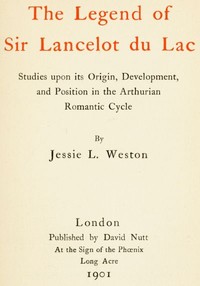
The Legend of Sir Lancelot du Lac: Studies upon its Origin, Development, and Position in the Arthurian Romantic Cycle
Written by Jessie L. (Jessie Laidlay) Weston
Chaptra reads alongside you — AI insights, chapter breakdowns and reader discussions for every book. Join free
About this book
Reading guide
Themes, characters and key ideas in The Legend of Sir Lancelot du Lac: Studies upon its Origin, Development, and Position in the Arthurian Romantic Cycle, written by Chaptra AI.
- about 12 hours
- advanced
- Scholarly
- Analytical
- Investigative
Jessie L. Weston's "The Legend of Sir Lancelot du Lac" is a seminal academic study from the early 20th century, meticulously investigating the origins and development of the iconic Arthurian knight. Challenging the popular perception of Lancelot as an original fixture in the Arthurian cycle, Weston meticulously traces his literary evolution, arguing for his later integration into the tradition. The book scrutinizes early textual references and the nuances of Lancelot's character, particularly his defining relationship with Queen Guinevere, which Weston posits as a subsequent literary invention. Through rigorous textual analysis, Weston seeks to demystify Lancelot's narrative, shedding light on the complex sources and influences that forged one of literature's most enduring figures and his central role in the tragic downfall of Camelot.
“"The striking fact of Lancelot's absence from the earliest forms of the Arthurian legend is one that cannot be too strongly emphasized."”
Key themes
- The Evolution of Myth and Legend
- This is the overarching theme of Weston's study. She meticulously demonstrates how the Arthurian legend, far from being static, is a dynamic entity that evolved over centuries, with characters like Lancelot being deliberate additions and modifications. The book explores the process of myth-making and literary accretion.
- The Construction of Literary Characters
- Weston delves into how Lancelot, Guinevere, and their relationship were not organically 'found' but were consciously constructed by medieval authors to serve specific thematic and narrative purposes. This theme emphasizes the agency of writers in shaping iconic figures and their roles within a larger literary universe.
- The Role of Academic Inquiry in Understanding Literature
- This meta-theme highlights the book itself as an example of rigorous scholarship. Weston demonstrates how detailed textual analysis, historical context, and critical thinking are essential tools for demystifying literary origins, challenging popular misconceptions, and providing deeper insights into the construction and meaning of literature.
Worth discussing
How does Weston's methodology of textual analysis contribute to our understanding of literary evolution?
Chapter-by-chapter breakdowns, character arcs and the full thematic analysis come with a free account.
Discussions
No one has started one yet
Questions this book opens up
No discussions yet
Be the first to start a discussion about this book!
Sign up to start the discussionReviews
No reviews yet
Be the first to review this book!