
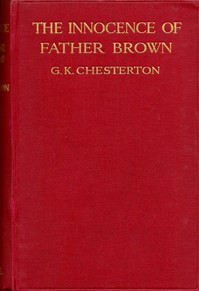
The innocence of Father Brown
Written by G. K. (Gilbert Keith) Chesterton
Chaptra reads alongside you — AI insights, chapter breakdowns and reader discussions for every book. Join free
About this book
Read it with a club
Chaptra's mystery and crime clubs — small groups reading the same books and talking as they go.


Whodunit Wednesdays
Mystery and crime
- 4 members
- 4 discussions
- Active Sep 11
One mystery a fortnight. We stop at the reveal, everyone posts their accusation, and then we read on together. This is a Chaptra house club — set up and moderated by us to get the conversation going. Open to everyone; jump in anywhere.
Read The innocence of Father Brown alongside people who are reading it too.
Chaptra Prime — paid clubs, every club feature, and unlimited reading support, for $5 a month or $60 once.
See PrimeReading guide
Themes, characters and key ideas in The innocence of Father Brown, written by Chaptra AI.
- about 8 hours
- intermediate
- mysterious
- philosophical
- humorous
G. K. Chesterton's "The Innocence of Father Brown" introduces readers to a deceptively unassuming Catholic priest who employs a unique blend of psychological insight, moral understanding, and keen observation to solve baffling crimes. Far from relying on forensic science or physical clues, Father Brown delves into the human heart, understanding the motivations and spiritual failings that drive people to commit misdeeds. Each short story in this collection presents a seemingly impossible mystery, which Father Brown unravels through unconventional reasoning, often surprising the more conventional detectives and criminals around him. The book is not merely a collection of detective stories but also a profound exploration of sin, redemption, reason, and faith, all delivered with Chesterton's characteristic wit and paradox.
“"I am a man," said Father Brown, "and I have seen the inside of too many men to believe in the mere outside of them."”
Key themes
- The Nature of Evil and Sin
- Central to Father Brown's philosophy, this theme explores how evil manifests in the human heart, often hiding behind respectability or intellectual sophistication. Father Brown understands sin not as an abstract concept, but as a deeply personal, psychological, and spiritual reality. He recognizes that anyone is capable of evil and that its roots often lie in pride, greed, or a distorted sense of justice.
- Appearances vs. Reality
- A recurring motif throughout the collection, this theme highlights how superficial appearances are often misleading and that true understanding requires looking beyond the obvious. Father Brown's unassuming exterior belies his sharp intellect, while many criminals hide behind facades of respectability, piety, or even madness. Chesterton consistently challenges the reader's assumptions about who is good, who is evil, and what constitutes a logical explanation.
- Reason, Intuition, and Faith
- Chesterton explores the interplay and often the tension between different modes of understanding the world. Conventional detectives like Valentin rely on pure reason and empirical evidence, often failing to grasp the deeper truths. Father Brown, while certainly logical, augments reason with a profound intuition, spiritual empathy, and a faith-informed understanding of human psychology that allows him to penetrate motives and see patterns invisible to others. He demonstrates that a holistic understanding requires more than just scientific observation.
Worth discussing
How does Father Brown's method of solving crimes differ from other famous detectives like Sherlock Holmes or Hercule Poirot? What are the strengths and weaknesses of his approach?
Chapter-by-chapter breakdowns, character arcs and the full thematic analysis come with a free account.
Discussions
No one has started one yet
Questions this book opens up
No discussions yet
Be the first to start a discussion about this book!
Sign up to start the discussionReviews
No reviews yet
Be the first to review this book!