
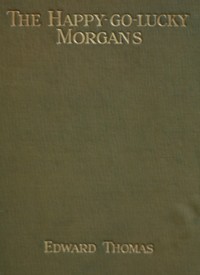
The Happy-go-lucky Morgans
Written by Edward Thomas
Chaptra reads alongside you — AI insights, chapter breakdowns and reader discussions for every book. Join free
About this book
Reading guide
Themes, characters and key ideas in The Happy-go-lucky Morgans, written by Chaptra AI.
- about 8 hours
- intermediate
- Nostalgic
- Bittersweet
- Evocative
Edward Thomas's "The Happy-go-lucky Morgans" is a poignant early 20th-century novel that vividly portrays the chaotic yet endearing life of the Morgan family at Abercorran House in Balham. Through the nostalgic lens of a first-person narrator, the story delves into themes of childhood, memory, and the bittersweet passage of time, celebrating a household brimming with Welsh culture, family members, and animals. The narrative captures the vibrant energy of their past, juxtaposed with the melancholic awareness of their inevitable decline as children mature and depart. Ann, the steadfast servant, serves as a symbolic anchor, connecting the fading glories of the past to a quieter, changing present, making it a reflective exploration of domestic life and the enduring power of memory.
“Abercorran House was not merely a dwelling; it was a living, breathing creature, echoing with the laughter of a dozen lives and the scent of damp earth from the garden.”
Key themes
- Nostalgia and Memory
- The novel is primarily a meditation on nostalgia and the power of memory. The narrator's entire perspective is filtered through the lens of recollection, meticulously reconstructing the past with vivid detail and emotional resonance. This theme explores how individuals make sense of their present by revisiting and cherishing their past, even when that past is tinged with sadness over what has been lost.
- The Passage of Time and Change
- This theme explores the inevitable and often bittersweet nature of time's progression. The novel contrasts the vibrant, chaotic past of the Morgan family with their eventual decline and dispersal, reflecting on how life evolves, children grow up, and circumstances shift. It acknowledges the beauty of impermanence while lamenting what is lost.
- Family and Home
- Central to the narrative is the portrayal of the Morgan family and their home, Abercorran House, as a vibrant, almost sentient entity. The theme explores the profound significance of family bonds, the unique dynamics of a household, and the role of a physical space in shaping identity and fostering a sense of belonging. It celebrates the warmth, chaos, and enduring love within a family unit.
Worth discussing
How does the narrator's first-person perspective shape our understanding and emotional connection to the Morgan family's story?
Chapter-by-chapter breakdowns, character arcs and the full thematic analysis come with a free account.
Discussions
No one has started one yet
Questions this book opens up
No discussions yet
Be the first to start a discussion about this book!
Sign up to start the discussionReviews
No reviews yet
Be the first to review this book!