
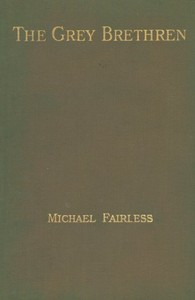
The Grey Brethren, and Other Fragments in Prose and Verse
Written by Michael Fairless
Chaptra reads alongside you — AI insights, chapter breakdowns and reader discussions for every book. Join free
About this book
Reading guide
Themes, characters and key ideas in The Grey Brethren, and Other Fragments in Prose and Verse, written by Chaptra AI.
- about 8 hours
- intermediate
- contemplative
- serene
- nostalgic
Michael Fairless's "The Grey Brethren, and Other Fragments in Prose and Verse" is an early 20th-century collection that beautifully interweaves prose and poetry, reflecting themes of spirituality, nature, and the human condition. Through a unique narrative style, Fairless presents a mosaic of contemplative essays, enchanting fairy tales, and lyrical poems, all aimed at illustrating the profound beauty and wisdom inherent in life's simplicity. The titular piece offers tender recollections of a Quaker childhood, while subsequent fragments, such as moralistic fairy tales and observations on the seasons, invite readers into a world where everyday existence is imbued with spiritual depth. This collection gently guides its audience to appreciate the interconnectedness of all life and to find solace and mystery in the quiet moments of reflection.
“In the quiet grey of morning, where silence spoke louder than words, we found the truest communion.”
Key themes
- Spirituality and Inner Peace
- This theme explores the profound connection to the divine and the search for inner tranquility, often found outside conventional religious structures. Fairless delves into the quiet reverence of Quaker life, the 'soul's journey,' and the universal longing for meaning, suggesting that spiritual understanding is deeply personal and often discovered in moments of reflection and simplicity.
- Nature's Wisdom and Interconnectedness
- Fairless portrays nature not merely as a setting but as a living entity that offers profound lessons and reflects universal truths. The changing seasons, the life cycles of flora and fauna, and the elements themselves are presented as metaphors for human experience, growth, and the cyclical nature of existence. The theme stresses that all life is interwoven and dependent.
- The Beauty and Wisdom of Simplicity
- This theme champions a life stripped of unnecessary complexities and material excess, advocating for the profound beauty and wisdom found in humble living, quiet moments, and genuine human connection. Fairless suggests that true richness lies not in accumulation but in appreciation of the fundamental elements of life.
Worth discussing
How does Fairless's fragmented structure contribute to the overall thematic experience of the collection?
Chapter-by-chapter breakdowns, character arcs and the full thematic analysis come with a free account.
Discussions
No one has started one yet
Questions this book opens up
No discussions yet
Be the first to start a discussion about this book!
Sign up to start the discussionReviews
No reviews yet
Be the first to review this book!