
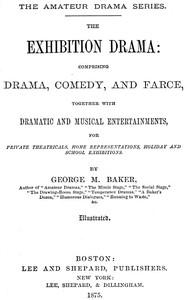
The Exhibition Drama: Comprising Drama, Comedy, and Farce, Together with Dramatic and Musical Entertainments
Written by George M. (George Melville) Baker
Chaptra reads alongside you — AI insights, chapter breakdowns and reader discussions for every book. Join free
About this book
Reading guide
Themes, characters and key ideas in The Exhibition Drama: Comprising Drama, Comedy, and Farce, Together with Dramatic and Musical Entertainments, written by Chaptra AI.
- about 8 hours
- intermediate
- humorous
- lighthearted
- didactic
George M. Baker's "The Exhibition Drama" is a multifaceted collection of short theatrical pieces, encompassing dramas, comedies, farces, and musical entertainments, designed primarily for amateur theatricals and public 'exhibitions' in the late 19th century. This volume serves as a vibrant snapshot of popular Victorian-era domestic entertainment, showcasing a range of human experiences from the comedic absurdities of daily life to more serious moral dilemmas. Each piece is self-contained, offering distinct plots and character sets tailored for easy staging and clear thematic delivery, often with an underlying didactic or moralistic tone characteristic of its time. The collection provides insight into the social values, humor, and dramatic conventions prevalent in American parlor and school performances.
“Oh, what a tangled web we weave, when first we practice to deceive... especially when one forgets the threads!”
Key themes
- Morality and Virtue
- Many plays, especially the dramas, explicitly or implicitly explore themes of morality, integrity, and virtuous conduct. Characters are often tested on their honesty, kindness, and adherence to social norms, with resolutions frequently reinforcing the idea that good deeds are rewarded and deceit or selfishness leads to negative consequences. This theme reflects the didactic function of much Victorian-era entertainment.
- Social Etiquette and Manners
- Central to many comedies and farces is the exploration of social customs, proper behavior, and the humorous consequences of violating etiquette. Humor often arises from misunderstandings, awkward social situations, or characters' struggles to conform (or deliberately defy) societal expectations, highlighting the importance placed on decorum in 19th-century society.
- Domestic Life and Family Dynamics
- Many plays are set within the home and revolve around the interactions, conflicts, and joys of family members. Themes include parental authority, sibling rivalry, romantic attachments, and the challenges of maintaining harmony within the household. These plays often reflect idealized or comically exaggerated versions of 19th-century family structures.
Worth discussing
How do the different genres (drama, comedy, farce) in this collection reflect distinct aspects of Victorian-era entertainment and societal values?
Chapter-by-chapter breakdowns, character arcs and the full thematic analysis come with a free account.
Discussions
No one has started one yet
Questions this book opens up
No discussions yet
Be the first to start a discussion about this book!
Sign up to start the discussionReviews
No reviews yet
Be the first to review this book!