
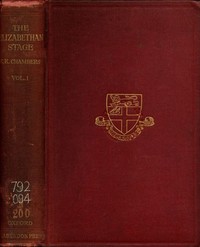
The Elizabethan Stage, Vol. 1
Written by E. K. (Edmund Kerchever) Chambers
Chaptra reads alongside you — AI insights, chapter breakdowns and reader discussions for every book. Join free
About this book
Read it with a club
Chaptra's poetry and plays clubs — small groups reading the same books and talking as they go.


Shakespeare Out Loud
Poetry and plays
- 4 members
- 4 discussions
- Active Sep 11
Plays are scripts, not novels. We read them aloud, in parts, and it changes everything. This is a Chaptra house club — set up and moderated by us to get the conversation going. Open to everyone; jump in anywhere.
Read The Elizabethan Stage, Vol. 1 alongside people who are reading it too.
Chaptra Prime — paid clubs, every club feature, and unlimited reading support, for $5 a month or $60 once.
See PrimeReading guide
Themes, characters and key ideas in The Elizabethan Stage, Vol. 1, written by Chaptra AI.
- about 8 hours
- advanced
- Academic
- Historical
- Analytical
E. K. Chambers' "The Elizabethan Stage, Vol. 1" is a foundational academic work from the early 20th century, meticulously charting the evolution of the Elizabethan stage as a cultural institution. This volume establishes the historical and socio-economic context for theatrical practices, with a particular emphasis on the profound influence of the Elizabethan Court. Chambers synthesizes decades of research to explore the origins of the stage, detailing elements like court pageantry and plays, and the intricate relationship between performance and royal patronage. The text adopts a rigorous academic tone, laying a comprehensive groundwork for understanding the vibrant theatrical landscape of the era.
“"The stage, no less than the court or the church, was a mirror of the age, reflecting its aspirations, its anxieties, and its evolving social structures."”
Key themes
- Institutional Development of Theatre
- This theme explores how theatre evolved from disparate, often amateur, performances into a structured, professional institution with its own economics, regulations, and social standing. Chambers meticulously traces the establishment of acting companies, playhouses, and the administrative frameworks that governed them, highlighting the transition from sporadic entertainment to a recognized industry.
- Socio-economic Context of Performance
- Chambers extensively details how the broader social and economic conditions of Elizabethan England—such as urbanization, population growth, social mobility, and the rise of a money economy—directly influenced the demand for and supply of theatrical entertainment. This theme emphasizes that theatre was not isolated but deeply embedded in the daily lives and economic realities of the populace.
- Court Patronage and Control
- This theme examines the critical role of the Elizabethan Court, including the monarch and nobility, in fostering, legitimizing, and simultaneously controlling theatrical practices. The Court provided crucial financial support, political protection, and a prestigious platform for performances, but also exerted significant influence through censorship and regulation, shaping both the content and form of plays.
Worth discussing
How does Chambers' emphasis on the institutional aspects of theatre change our understanding of Elizabethan drama compared to a purely literary approach?
Chapter-by-chapter breakdowns, character arcs and the full thematic analysis come with a free account.
Discussions
No one has started one yet
Questions this book opens up
No discussions yet
Be the first to start a discussion about this book!
Sign up to start the discussionReviews
No reviews yet
Be the first to review this book!