
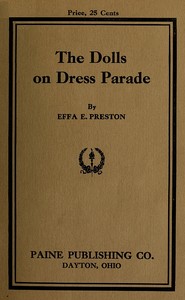
The Dolls on Dress Parade
Written by Effa E. (Effa Estelle) Preston
Chaptra reads alongside you — AI insights, chapter breakdowns and reader discussions for every book. Join free
About this book
Read it with a club
Chaptra's poetry and plays clubs — small groups reading the same books and talking as they go.


Shakespeare Out Loud
Poetry and plays
- 4 members
- 4 discussions
- Active Sep 11
Plays are scripts, not novels. We read them aloud, in parts, and it changes everything. This is a Chaptra house club — set up and moderated by us to get the conversation going. Open to everyone; jump in anywhere.
Read The Dolls on Dress Parade alongside people who are reading it too.
Chaptra Prime — paid clubs, every club feature, and unlimited reading support, for $5 a month or $60 once.
See PrimeReading guide
Themes, characters and key ideas in The Dolls on Dress Parade, written by Chaptra AI.
- about 1 hours
- beginner
- whimsical
- lighthearted
- cheerful
Effa E. Preston's "The Dolls on Dress Parade" is a charming and lighthearted children's operetta or play, designed for amateur theatrical productions, typically in schools or community settings. It features a cast of various dolls who come to life, often overseen by a child or a 'Doll Mother,' to present a delightful 'parade' of songs, dances, and recitations. The piece is characterized by its simple, accessible dialogue and musical numbers, making it an ideal choice for young performers to explore the magic of the stage. Its primary purpose is to entertain and provide a creative outlet for children, celebrating imagination and the joy of play.
“"We are the dolls, prim and neat, with tiny hands and tiny feet!"”
Key themes
- Imagination and Play
- This is the central theme, celebrating the boundless creativity of childhood where inanimate objects like dolls can come alive and participate in grand adventures. The entire premise of the play relies on this imaginative leap.
- Friendship and Community
- Despite their individual presentations, the dolls often come together for a unified finale, symbolizing camaraderie and the joy of shared experience. The play fosters a sense of collective purpose among the performers.
- The Joy of Performance
- The play is inherently about putting on a show. It celebrates the excitement of presenting oneself, sharing talents, and entertaining an audience, making it a valuable tool for introducing children to the performing arts.
Worth discussing
How does the play encourage imagination in both the performers and the audience?
Chapter-by-chapter breakdowns, character arcs and the full thematic analysis come with a free account.
Discussions
No one has started one yet
Questions this book opens up
No discussions yet
Be the first to start a discussion about this book!
Sign up to start the discussionReviews
No reviews yet
Be the first to review this book!