
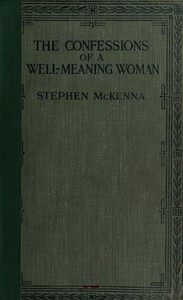
The confessions of a well-meaning woman
Written by Stephen McKenna
Chaptra reads alongside you — AI insights, chapter breakdowns and reader discussions for every book. Join free
About this book
Reading guide
Themes, characters and key ideas in The confessions of a well-meaning woman, written by Chaptra AI.
- about 10 hours
- intermediate
- introspective
- melancholy
- observational
Stephen McKenna's "The Confessions of a Well-Meaning Woman" delves into the intricate inner world of Lady Ann Spenworth, an aristocratic woman grappling with the rigid societal expectations and familial duties of early 20th-century Britain. Recovering from surgery, Lady Ann embarks on a profound introspection, reflecting on her marriage, her relationships with her husband Arthur's family, and the future of her son, Will. The novel meticulously explores her conflicts between personal desires and the demands of family loyalty, social propriety, and financial stability. Through her 'confessions,' McKenna offers a critical examination of the constraints placed upon women in her social circle and the often-unseen sacrifices made in the name of 'well-meaning' duty.
“"One spends a lifetime striving to be 'well-meaning,' only to discover that the road to good intentions is often paved with quiet sacrifices."”
Key themes
- Societal Expectations and Duty
- This theme is central to Lady Ann's narrative, exploring how the rigid social codes and expectations of early 20th-century aristocracy dictate individual lives, particularly for women. Lady Ann's 'well-meaning' nature often compels her to prioritize duty, family loyalty, and propriety over personal desires, leading to internal conflict and sacrifice.
- The Role of Women in Aristocracy
- The novel critically examines the limited agency and prescribed roles for women within the upper echelons of early 20th-century society. Lady Ann's life exemplifies how women, despite their privileged status, were often confined to domestic spheres, expected to manage households, bear heirs, and uphold social appearances, with personal fulfillment often taking a backseat.
- Family Loyalty and Personal Sacrifice
- Lady Ann's reflections are saturated with instances of personal sacrifice made in the name of family loyalty. She grapples with the emotional costs of prioritizing her husband's family, her son's future, and the collective 'good' of the Spenworth name over her own desires and emotional well-being. This theme explores the often-unseen burdens carried by individuals within close-knit, high-stakes family structures.
Worth discussing
How does Lady Ann's physical recovery mirror or influence her emotional and psychological introspection?
Chapter-by-chapter breakdowns, character arcs and the full thematic analysis come with a free account.
Discussions
No one has started one yet
Questions this book opens up
No discussions yet
Be the first to start a discussion about this book!
Sign up to start the discussionReviews
No reviews yet
Be the first to review this book!