
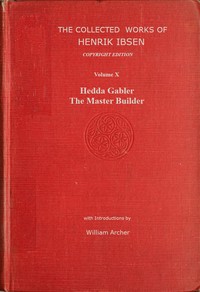
The collected works of Henrik Ibsen Vol. 10 (of 11)
Written by Henrik Ibsen
Chaptra reads alongside you — AI insights, chapter breakdowns and reader discussions for every book. Join free
About this book
Reading guide
Themes, characters and key ideas in The collected works of Henrik Ibsen Vol. 10 (of 11), written by Chaptra AI.
- about 10 hours
- advanced
- dark
- psychological
- tragic
The Collected Works of Henrik Ibsen Vol. 10 presents two pivotal psychological dramas, "Hedda Gabler" and "The Master Builder," showcasing Ibsen's profound insights into the human psyche and societal constraints. Both plays meticulously explore the destructive power of unfulfilled desires, the complexities of ambition, and the suffocating grip of societal expectations on individuals. Ibsen masterfully crafts protagonists, Hedda Gabler and Halvard Solness, who are trapped by their pasts and internal conflicts, leading to their tragic downfalls. This volume stands as a testament to Ibsen's revolutionary realism and his enduring critique of 19th-century bourgeois morality, cementing his legacy as a pioneer of modern drama.
“Hedda Gabler: "I want to influence a human destiny." (Hedda Gabler)”
Key themes
- Individual vs. Societal Expectations
- Both plays critically examine the suffocating pressure of societal norms and expectations on individual freedom and desire. Hedda Gabler is trapped by the conventions of marriage and domesticity, while Solness is constrained by professional expectations and the judgment of his community. Their struggles highlight the destructive consequences of conforming or rebelling against societal roles.
- Ambition and Legacy
- The destructive nature of ambition is a central theme, particularly in 'The Master Builder.' Solness is driven by a relentless desire to build and to maintain his legacy, which comes at a great personal cost, including his marriage and his children's lives. Hedda's ambition, though less conventional, is to control and shape human destiny, which also leads to tragic outcomes. Both characters are obsessed with leaving a mark or asserting their will.
- Gender and Power
- Both plays offer incisive critiques of gender roles in 19th-century society. 'Hedda Gabler' is a powerful exploration of a woman of intelligence and spirit trapped by the limited options available to her, leading her to seek power through manipulation and destruction. 'The Master Builder' features Hilda Wangel, a young woman who challenges traditional female passivity, acting as a catalyst for Solness's actions, demonstrating a different kind of female agency, though still within a framework of influencing a man.
Worth discussing
Discuss the concept of 'freedom' as portrayed by Hedda Gabler and Halvard Solness. What does freedom mean to each, and how do their pursuits of it lead to their downfall?
Chapter-by-chapter breakdowns, character arcs and the full thematic analysis come with a free account.
Discussions
No one has started one yet
Questions this book opens up
No discussions yet
Be the first to start a discussion about this book!
Sign up to start the discussionReviews
No reviews yet
Be the first to review this book!