
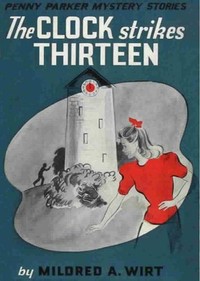
The Clock Strikes Thirteen
Written by Mildred A. (Mildred Augustine) Wirt
Chaptra reads alongside you — AI insights, chapter breakdowns and reader discussions for every book. Join free
About this book
Reading guide
Themes, characters and key ideas in The Clock Strikes Thirteen, written by Chaptra AI.
- about 8 hours
- beginner
- Mysterious
- Adventurous
- Intriguing
Mildred A. Wirt's "The Clock Strikes Thirteen" introduces Penny Parker, a spirited young woman working at her father's newspaper, who becomes entangled in a perplexing local mystery. The narrative begins with Penny's uncanny observation of a clock striking thirteen, an anomaly she instinctively believes signals deeper trouble. This peculiar event, coupled with a series of critical telegrams aimed at her father's publication and a mysterious fire at a local farm, compels Penny to investigate. Driven by her adventurous spirit and keen intellect, she delves into a web of intrigue involving an underhanded organization. The story blends familial warmth with classic detective elements, showcasing Penny's determination to uncover the truth behind these strange occurrences in her community.
“"I tell you, Father, a clock doesn't strike thirteen unless something is terribly, terribly wrong!"”
Key themes
- Truth and Deception
- Central to the mystery genre, this theme explores Penny's relentless pursuit of truth amidst a web of lies and misdirection. The clock striking thirteen serves as a powerful symbol of fundamental deception, challenging the perceived order of reality.
- Youthful Independence and Agency
- This theme celebrates Penny Parker's autonomy, intelligence, and determination, often in the face of adult skepticism. It underscores the idea that young people possess keen insights and the capability to effect significant change, challenging traditional notions of who can solve complex problems.
- Community and Corruption
- The novel subtly explores the darker underbelly of a seemingly peaceful community, revealing how 'underhanded organizations' can operate within its fabric. It examines the impact of corruption on local institutions and the trust residents place in their neighbors and systems, and how one individual can expose it.
Worth discussing
How does Penny Parker challenge traditional gender roles or expectations for young women in the early 1940s?
Chapter-by-chapter breakdowns, character arcs and the full thematic analysis come with a free account.
Discussions
No one has started one yet
Questions this book opens up
No discussions yet
Be the first to start a discussion about this book!
Sign up to start the discussionReviews
No reviews yet
Be the first to review this book!