
About this book
Reading guide
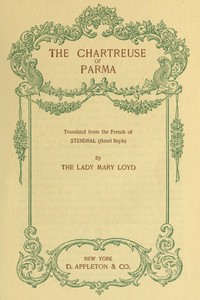
Themes, characters and key ideas in The Chartreuse of Parma: Translated from the French of Stendhal (Henri Beyle), written by Chaptra AI.
- about 20 hours
- advanced
- Romantic
- Intrigue
- Political
Stendhal's "The Chartreuse of Parma" is a vibrant historical novel set in post-Napoleonic Italy, tracing the adventurous life of the young nobleman Fabrizio del Dongo. From his naive participation in the Battle of Waterloo to his entanglement in the petty, corrupt politics of the fictional court of Parma, Fabrizio navigates a world brimming with romantic escapades, political intrigue, and personal ambition. The narrative masterfully blends psychological depth with a sweeping historical panorama, exploring the clash between youthful idealism and cynical realism, and the enduring power of passionate love and political machination. Ultimately, Fabrizio's journey is one of disillusionment and a search for meaning beyond worldly pursuits, culminating in a reflective retreat from society.
“The happiness of a lover is to be desired with passion, but never to be asked for.”
Key themes
- Love and Passion
- The novel is saturated with intense, often illicit, passions that drive the characters' actions and shape their destinies. Stendhal explores love in its various forms: Gina's fervent devotion to Fabrizio, Mosca's enduring and patient love for Gina, and Fabrizio's multiple romantic entanglements, culminating in his profound but tragic love for Clélia. This theme highlights how love can be a source of immense joy, desperate manipulation, moral conflict, and ultimate destruction, often defying societal norms and religious vows.
- Political Intrigue and Corruption
- Set against the backdrop of post-Napoleonic Italy, the novel offers a scathing critique of the petty tyrannies and pervasive corruption of small Italian courts. Stendhal vividly depicts a world where justice is a tool for the powerful, personal vendettas dictate policy, and political ambition is pursued through endless machinations and deceit. The arbitrary nature of power, where a prince's whim can decide a man's fate, is a central element.
- Idealism vs. Realism
- Fabrizio begins the novel as a fervent idealist, inspired by Napoleonic glory and seeking heroic action. His journey is a painful education in the cynical realities of the world, where heroism is often unrewarded, political systems are corrupt, and personal ambition is frequently thwarted by petty jealousies and arbitrary power. Count Mosca serves as the embodiment of cynical realism, offering pragmatic advice and a stark view of human nature.
Worth discussing
How does Stendhal portray the nature of political power and corruption in Parma? Is this portrayal still relevant today?
Chapter-by-chapter breakdowns, character arcs and the full thematic analysis come with a free account.
Discussions
No one has started one yet
Questions this book opens up
No discussions yet
Be the first to start a discussion about this book!
Sign up to start the discussionReviews
No reviews yet
Be the first to review this book!