
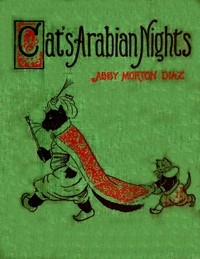
The cats' Arabian nights, or, King Grimalkum
Written by Abby Morton Diaz
Chaptra reads alongside you — AI insights, chapter breakdowns and reader discussions for every book. Join free
About this book
Read it with a club
Chaptra's science fiction and fantasy clubs — small groups reading the same books and talking as they go.


Sci-Fi That Got It Right (And Wrong)
Science fiction and fantasy
- 4 members
- 4 discussions
- Active Sep 11
Old science fiction, read against what actually happened. We keep score. This is a Chaptra house club — set up and moderated by us to get the conversation going. Open to everyone; jump in anywhere.
Read The cats' Arabian nights, or, King Grimalkum alongside people who are reading it too.
Also here: The Dragon Problem, Hard SF vs Soft SF
Chaptra Prime — paid clubs, every club feature, and unlimited reading support, for $5 a month or $60 once.
See PrimeReading guide
Themes, characters and key ideas in The cats' Arabian nights, or, King Grimalkum, written by Chaptra AI.
- about 8 hours
- intermediate
- whimsical
- humorous
- moralistic
Abby Morton Diaz's "The Cats' Arabian Nights, or, King Grimalkum" is a charming late 19th-century collection of interconnected feline tales, framed by a whimsical premise where children and adults gather to share cat stories. The central narrative revolves around Pussyanita, a clever cat in a kingdom ruled by King Grimalkum, who has issued a cruel decree about acceptable cat colors. To challenge this arbitrary rule and navigate societal complexities, Pussyanita embarks on a storytelling journey, promising to share the tale of her ancestor, Pinky-White, and her transformation from unhappiness to joy. The book blends humor and moral lessons, exploring themes of cruelty, kindness, and the power of narrative through enchanting feline adventures, reminiscent of classic fables.
“"Let us gather all these marvelous accounts and compile them into a grand 'Cats' Arabian Nights' for all to hear!"”
Key themes
- Cruelty and Kindness
- This theme is central to the book, explored through King Grimalkum's arbitrary and cruel decree regarding cat colors versus the empathy and compassion shown by characters like Pussyanita. The stories within the frame narrative likely provide examples of how acts of kindness can alleviate suffering and challenge injustice, contrasting sharply with the negative impacts of cruelty and prejudice.
- The Power of Storytelling
- The entire structure of the book, being a 'Cats' Arabian Nights,' emphasizes the transformative and influential power of narrative. Pussyanita uses storytelling not just for entertainment but as a means to challenge a cruel king, impart moral lessons, and perhaps even inspire societal change. Stories are presented as tools for empathy, education, and resistance.
- Social Hierarchy and Injustice
- The feline kingdom under King Grimalkum explicitly illustrates a rigid social hierarchy imposed by an arbitrary ruler. The decree based on cat colors creates inherent injustice, where some cats are favored and others marginalized, regardless of their character or abilities. The book examines the consequences of such systems and the ways individuals navigate or resist them.
Worth discussing
How does the frame narrative of the 'Cats' Arabian Nights' enhance the storytelling and its themes?
Chapter-by-chapter breakdowns, character arcs and the full thematic analysis come with a free account.
Discussions
No one has started one yet
Questions this book opens up
No discussions yet
Be the first to start a discussion about this book!
Sign up to start the discussionReviews
No reviews yet
Be the first to review this book!