
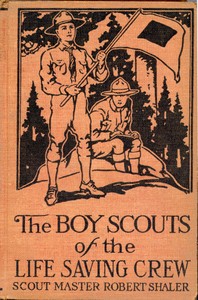
The Boy Scouts of the Life Saving Crew
Written by Robert Shaler
Chaptra reads alongside you — AI insights, chapter breakdowns and reader discussions for every book. Join free
About this book
Reading guide
Themes, characters and key ideas in The Boy Scouts of the Life Saving Crew, written by Chaptra AI.
- about 8 hours
- intermediate
- adventurous
- uplifting
- heroic
Robert Shaler's "The Boy Scouts of the Life Saving Crew" is an early 20th-century children's adventure novel that champions the ideals of the Boy Scout movement through thrilling narratives. The story follows Alec Sands, Billy Worth, and Chester Brownell, three resourceful Boy Scouts, as they embark on a vacation to Santario on the Florida coast. From their initial act of bravery, rescuing a girl from a perilous railway trestle, the boys consistently demonstrate quick thinking, courage, and teamwork in a series of life-saving missions. The novel serves as an episodic journey highlighting the importance of preparedness, self-sacrifice, and the practical application of scouting principles in confronting various dangers.
“"A Scout is always prepared," Alec reminded them, his eyes fixed on the distant trestle.”
Key themes
- Bravery and Courage
- This is the cornerstone theme, explored through the boys' repeated willingness to face immediate danger for the sake of others. From the initial rescue on the railway trestle to subsequent life-saving missions, the Scouts consistently demonstrate fearlessness and resolve in high-stakes situations. It's not just the absence of fear, but the ability to act decisively despite it.
- Teamwork and Brotherhood
- The novel emphasizes the power of collective effort and mutual support. The three main characters, Alec, Billy, and Chester, consistently work together, pooling their skills and trusting each other to achieve their goals. Their success in rescue missions is often attributed to their coordinated actions and understanding of each other's strengths.
- Duty and Selfless Service
- The Scouts are driven by a strong sense of moral obligation to help others, embodying the principle of 'doing a good turn daily.' Their actions are not for recognition but because they understand it is their responsibility as Scouts and good citizens to aid those in distress, even at personal risk.
Worth discussing
How do the Boy Scout ideals (bravery, resourcefulness, teamwork) manifest in the boys' actions throughout the novel?
Chapter-by-chapter breakdowns, character arcs and the full thematic analysis come with a free account.
Discussions
No one has started one yet
Questions this book opens up
No discussions yet
Be the first to start a discussion about this book!
Sign up to start the discussionReviews
No reviews yet
Be the first to review this book!