
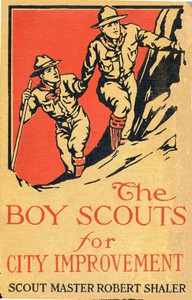
The Boy Scouts for City Improvement
Written by Robert Shaler
Chaptra reads alongside you — AI insights, chapter breakdowns and reader discussions for every book. Join free
About this book
Reading guide
Themes, characters and key ideas in The Boy Scouts for City Improvement, written by Chaptra AI.
- about 8 hours
- beginner
- uplifting
- wholesome
- adventurous
Robert Shaler's "The Boy Scouts for City Improvement" is an early 20th-century children's adventure story that champions civic responsibility and youth empowerment. Led by Assistant Scout Master Hugh Hardin and his friend Billy Worth, a group of Boy Scouts embarks on a mission to clean up their untidy town, spurred by their observation of its litter and neglect. The narrative follows their determined efforts as they brainstorm, plan, and execute the cleanup, facing various challenges and engaging with the town's residents. Through teamwork, perseverance, and adherence to the values of the Scout movement, the boys not only improve their community but also demonstrate the significant impact young people can have.
“"Look at this, Billy," Hugh sighed, gesturing at the strewn papers. "Our town deserves better."”
Key themes
- Community Improvement / Civic Responsibility
- This is the core theme of the book, directly addressed in its title. It explores the idea that every individual, regardless of age, has a responsibility to care for their community and actively contribute to its betterment. The Scouts' initiative to clean up their town serves as a direct example of practical civic engagement.
- Youth Empowerment / Leadership
- The book champions the idea that young people are capable of initiating and leading significant positive change. It showcases how the Boy Scouts, through their organization and determination, can identify a problem, devise a solution, and execute it, demonstrating effective leadership and the power of youth-led initiatives.
- Values of the Scout Movement
- The book serves as an embodiment of the core principles of the Boy Scout movement, such as duty to community, helpfulness, cleanliness, and courage. The Scouts' actions are directly motivated and guided by these values, showcasing them in a practical, real-world context for young readers.
Worth discussing
How do Hugh and Billy's initial observations lead to their determination for change? What does this say about civic responsibility?
Chapter-by-chapter breakdowns, character arcs and the full thematic analysis come with a free account.
Discussions
No one has started one yet
Questions this book opens up
No discussions yet
Be the first to start a discussion about this book!
Sign up to start the discussionReviews
No reviews yet
Be the first to review this book!