
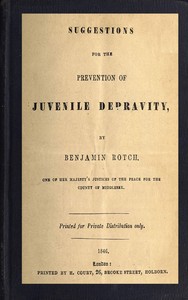
Suggestions for the Prevention of Juvenile Depravity
Written by Benjamin Rotch
Chaptra reads alongside you — AI insights, chapter breakdowns and reader discussions for every book. Join free
About this book
Reading guide
Themes, characters and key ideas in Suggestions for the Prevention of Juvenile Depravity, written by Chaptra AI.
- about 6 hours
- advanced
- didactic
- serious
- reformist
Benjamin Rotch's 'Suggestions for the Prevention of Juvenile Depravity' is a 19th-century treatise that addresses the pressing social issue of rising crime among young people. As a magistrate, Rotch offers a series of practical and philosophical recommendations aimed at curbing juvenile delinquency by focusing on early intervention, improved education, moral guidance, and the amelioration of societal conditions that foster criminal behavior. The work reflects the prevailing social reform movements of its era, advocating for a blend of punitive and rehabilitative measures. It serves as a significant historical document, illustrating contemporary concerns about urban poverty, moral decay, and the role of the state and community in shaping the character of its youth.
“"The prevention of depravity in youth is a duty incumbent upon every member of society, for the future health of the nation rests upon the moral fiber of its rising generation."”
Key themes
- Social Responsibility and Welfare
- This theme explores the idea that society as a whole, and particularly the state and philanthropic organizations, has a moral obligation to care for its most vulnerable members, especially children, to prevent them from falling into crime. Rotch argues that neglect of the young leads to greater societal problems later on.
- Education as a Preventative Measure
- Rotch strongly emphasizes education, both academic and moral, as the cornerstone of preventing juvenile depravity. He likely views ignorance and idleness as primary drivers of crime and proposes structured educational environments as a means of instilling discipline, useful skills, and moral values.
- Moral Rectitude and Discipline
- A core theme reflecting Victorian values, Rotch's work emphasizes the cultivation of strong moral character, self-discipline, and adherence to societal norms. He likely sees a breakdown in moral values as a primary cause of depravity and advocates for rigorous moral training and disciplinary structures.
Worth discussing
How do Rotch's 'suggestions' reflect the social and moral anxieties of 19th-century Britain regarding youth and poverty?
Chapter-by-chapter breakdowns, character arcs and the full thematic analysis come with a free account.
Discussions
No one has started one yet
Questions this book opens up
No discussions yet
Be the first to start a discussion about this book!
Sign up to start the discussionReviews
No reviews yet
Be the first to review this book!