
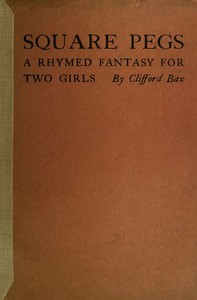
Square Pegs: A Rhymed Fantasy For Two Girls
Written by Clifford Bax
Chaptra reads alongside you — AI insights, chapter breakdowns and reader discussions for every book. Join free
About this book
Reading guide
Themes, characters and key ideas in Square Pegs: A Rhymed Fantasy For Two Girls, written by Chaptra AI.
- about 8 hours
- intermediate
- whimsical
- romantic
- humorous
Clifford Bax's "Square Pegs: A Rhymed Fantasy For Two Girls" is an early 20th-century theatrical play that ingeniously uses time travel to explore the timeless nature of love and societal expectations. Set in an enchanted garden, the play brings together Hilda, a modern girl from the 20th century, and Gioconda, a Venetian girl from the 15th century, both disillusioned with their respective eras' romantic conventions. Through whimsical rhymed verse and poignant dialogue, they share their frustrations and role-play each other's romantic predicaments. This humorous and reflective encounter ultimately leads them to a shared realization: while expressions of love may change across centuries, its fundamental essence remains constant, prompting both girls to return to their own times with renewed appreciation and perspective.
“Oh, for a love that's carved in stone, not whispered in a hurried tone!”
Key themes
- Love and Romance Across Time
- The central theme explores how the expression and experience of love evolve (or remain constant) across different historical periods. The play contrasts Hilda's modern disenchantment with Gioconda's historical constraints, ultimately suggesting that while external forms change, the underlying human desire for connection and understanding remains timeless.
- Societal Expectations vs. Individual Desire
- Both Hilda and Gioconda are depicted as individuals whose personal desires for love and fulfillment clash with the prevailing societal expectations of their respective eras. This theme highlights the universal struggle to reconcile personal longing with external pressures and conventions, particularly for women.
- Appreciation of One's Own Reality
- The ultimate resolution of the play centers on the girls' realization that true contentment comes not from escaping one's reality, but from gaining perspective and appreciating the unique aspects of one's own life and time. They learn that every era has its challenges and its charms.
Worth discussing
How does the play use the concept of time travel to explore universal human desires and frustrations?
Chapter-by-chapter breakdowns, character arcs and the full thematic analysis come with a free account.
Discussions
No one has started one yet
Questions this book opens up
No discussions yet
Be the first to start a discussion about this book!
Sign up to start the discussionReviews
No reviews yet
Be the first to review this book!