
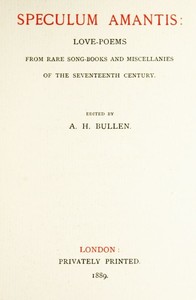
Speculum Amantis: Love Poems, from Rare Songbooks and Miscellanies of the Seventeenth Century
Written by Unknown author
Chaptra reads alongside you — AI insights, chapter breakdowns and reader discussions for every book. Join free
About this book
Reading guide
Themes, characters and key ideas in Speculum Amantis: Love Poems, from Rare Songbooks and Miscellanies of the Seventeenth Century, written by Chaptra AI.
- about 15 hours
- advanced
- romantic
- melancholy
- witty
“Speculum Amantis” is a meticulously curated anthology of 17th-century English love poems, drawn from rare songbooks and miscellanies, offering a panoramic view of amorous expression during a pivotal period in English literature. This collection brings to light the diverse voices, styles, and thematic concerns of poets, both known and anonymous, who explored the multifaceted nature of love, desire, and courtship. It serves as a valuable historical document, illuminating the cultural attitudes, poetic conventions, and linguistic nuances of the era. The poems collectively reflect a period grappling with the transition from Renaissance ideals to emerging Baroque sensibilities, characterized by both passionate intensity and intellectual wit.
“"My love is of a birth as rare / As 'tis for others to despair."”
Key themes
- Idealized Love and Beauty
- Many poems present love as a transcendent, almost spiritual experience, where the beloved's beauty is not merely physical but a reflection of divine perfection. This theme often involves hyperbolic descriptions of physical attributes and the elevation of the beloved to a celestial status, blending Platonic ideals with earthly passion.
- The Pain and Pleasure of Love
- Love is depicted as a paradoxical force, capable of bringing both exquisite joy and profound suffering. This theme explores the emotional extremes of romantic attachment, including the ecstasy of reciprocated love, the torment of unrequited passion, jealousy, separation, and the bittersweet nature of desire.
- Carpe Diem (Seize the Day)
- This theme urges the beloved to embrace love and physical pleasure before time inevitably takes away youth and beauty. It's often presented as a persuasive argument, highlighting the fleeting nature of life and the inevitability of decay, thus advocating for immediate gratification.
Worth discussing
How do the portrayals of love in these 17th-century poems compare to modern conceptions of romance and relationships?
Chapter-by-chapter breakdowns, character arcs and the full thematic analysis come with a free account.
Discussions
No one has started one yet
Questions this book opens up
No discussions yet
Be the first to start a discussion about this book!
Sign up to start the discussionReviews
No reviews yet
Be the first to review this book!