
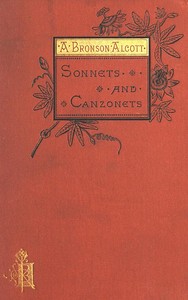
Sonnets and Canzonets
Written by Amos Bronson Alcott
Chaptra reads alongside you — AI insights, chapter breakdowns and reader discussions for every book. Join free
About this book
Reading guide
Themes, characters and key ideas in Sonnets and Canzonets, written by Chaptra AI.
- about 10 hours
- advanced
- philosophical
- reflective
- spiritual
Amos Bronson Alcott's "Sonnets and Canzonets" is a collection of lyrical poetry that serves as a profound expression of his transcendentalist philosophy. Through meticulously crafted sonnets and more song-like canzonets, Alcott explores themes of divine immanence, the spiritual journey of the soul, the beauty and symbolism of nature, and the pursuit of truth and self-reliance. The collection is less about narrative and more about intellectual and spiritual contemplation, inviting the reader into a reflective engagement with the core tenets of American Transcendentalism. It stands as a testament to Alcott's lifelong dedication to idealist thought and moral instruction, rendered in classical poetic forms.
“From Nature's heart, the Spirit's whispers rise.”
Key themes
- Divine Immanence and the Oversoul
- This theme explores the core transcendentalist belief that the divine is not a distant, transcendent entity but is inherently present within all creation—nature, humanity, and the universe itself. Alcott posits the 'Oversoul' as the universal spirit connecting all beings, suggesting that every individual soul is a fragment or reflection of this greater divine whole.
- Nature as Teacher and Divine Revelation
- Alcott, like other transcendentalists, views nature not merely as a physical environment but as a profound spiritual text, a direct manifestation of divine thought and a primary source of moral and philosophical instruction. Through careful observation and intuitive understanding of nature, one can discern universal truths and achieve spiritual enlightenment.
- Intuition, Self-Reliance, and Inner Truth
- A cornerstone of transcendentalism, this theme emphasizes the primacy of individual intuition and conscience over external authority, societal norms, or empirical reason. Alcott's poems advocate for a profound self-reliance, urging the individual to trust their inner spiritual light as the ultimate guide to truth and moral action, rather than conforming to established doctrines or conventions.
Worth discussing
How do Alcott's sonnets and canzonets serve as vehicles for his transcendentalist philosophy? What advantages do these poetic forms offer for expressing such ideas?
Chapter-by-chapter breakdowns, character arcs and the full thematic analysis come with a free account.
Discussions
No one has started one yet
Questions this book opens up
No discussions yet
Be the first to start a discussion about this book!
Sign up to start the discussionReviews
No reviews yet
Be the first to review this book!