
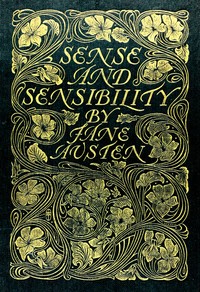
Sense and Sensibility
Written by Jane Austen
Chaptra reads alongside you — AI insights, chapter breakdowns and reader discussions for every book. Join free
About this book
Read it with a club
Chaptra's love and romance clubs — small groups reading the same books and talking as they go.


Enemies to Lovers Tribunal
Love and romance
- 4 members
- 4 discussions
- Active Sep 11
One trope, examined to destruction. We rank them, we argue, and we throw out the ones that are really just "he was rude once at a party". This is a Chaptra house club — set up and moderated by us to get the conversation going. Open to everyone; jump in anywhere.
Read Sense and Sensibility alongside people who are reading it too.
Also here: Hopeless Romantics Anonymous
Chaptra Prime — paid clubs, every club feature, and unlimited reading support, for $5 a month or $60 once.
See PrimeReading guide
Themes, characters and key ideas in Sense and Sensibility, written by Chaptra AI.
- about 10 hours
- intermediate
- romantic
- witty
- melancholy
Jane Austen's "Sense and Sensibility" explores the contrasting temperaments of the Dashwood sisters, Elinor and Marianne, as they navigate love, loss, and societal expectations in early 19th-century England. After their father's death leaves them financially vulnerable, the prudent Elinor and the impassioned Marianne are forced to confront the harsh realities of their limited prospects. The novel follows their individual romantic journeys, with Elinor enduring silent heartbreak over Edward Ferrars and Marianne suffering public humiliation from the deceptive Mr. Willoughby, ultimately leading them to a more balanced understanding of sense and sensibility in matters of the heart and life. Through their experiences, Austen critically examines the social constraints on women and the complexities of human nature.
“"It is not time or opportunity that is to determine intimacy; —it is disposition alone. Seven years would be insufficient to make some people acquainted with each other, and seven days are more than enough for others."”
Key themes
- Sense vs. Sensibility
- This is the central theme, explored through the contrasting personalities and experiences of Elinor (sense) and Marianne (sensibility). 'Sense' represents reason, prudence, self-control, and adherence to social decorum, while 'sensibility' embodies passion, emotional expression, spontaneity, and an appreciation for romantic ideals. The novel ultimately argues for a harmonious balance between these two extremes, demonstrating that both unchecked emotion and excessive restraint can lead to suffering.
- Social Class and Financial Security
- The novel vividly portrays the significant impact of social class and financial status on individuals, particularly women, in 18th-century English society. The Dashwood sisters' sudden poverty after their father's death underscores the precarious position of women without independent means, highlighting that marriage was often a necessity for economic survival rather than purely a choice for love. Characters like Fanny Dashwood, Lucy Steele, and Mr. Willoughby exemplify the mercenary attitudes prevalent in this social structure.
- Love and Marriage
- Austen explores various facets of love and marriage, contrasting passionate, impulsive infatuation with steady, enduring affection based on respect and compatibility. The novel critiques the superficiality of love driven by appearance or social standing, while advocating for unions founded on deeper understanding and shared values. It also examines the societal pressures and expectations surrounding marriage as a primary goal for women.
Worth discussing
How do Elinor and Marianne embody 'sense' and 'sensibility,' and does Austen ultimately advocate for one over the other, or for a balance?
Chapter-by-chapter breakdowns, character arcs and the full thematic analysis come with a free account.
Discussions
No one has started one yet
Questions this book opens up
No discussions yet
Be the first to start a discussion about this book!
Sign up to start the discussionReviews
No reviews yet
Be the first to review this book!