
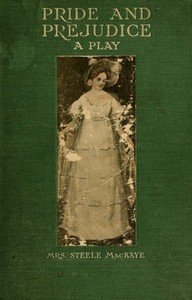
Pride and Prejudice, a play founded on Jane Austen's novel
Written by Jane Austen,Steele MacKaye
Chaptra reads alongside you — AI insights, chapter breakdowns and reader discussions for every book. Join free
About this book
Read it with a club
Chaptra's love and romance clubs — small groups reading the same books and talking as they go.


Enemies to Lovers Tribunal
Love and romance
- 4 members
- 4 discussions
- Active Sep 11
One trope, examined to destruction. We rank them, we argue, and we throw out the ones that are really just "he was rude once at a party". This is a Chaptra house club — set up and moderated by us to get the conversation going. Open to everyone; jump in anywhere.
Read Pride and Prejudice, a play founded on Jane Austen's novel alongside people who are reading it too.
Also here: Hopeless Romantics Anonymous
Chaptra Prime — paid clubs, every club feature, and unlimited reading support, for $5 a month or $60 once.
See PrimeReading guide
Themes, characters and key ideas in Pride and Prejudice, a play founded on Jane Austen's novel, written by Chaptra AI.
- about 8 hours
- intermediate
- romantic
- humorous
- witty
Mrs. Steele MacKaye's theatrical adaptation of Jane Austen's "Pride and Prejudice" brings the beloved 19th-century novel to the early 20th-century stage, faithfully capturing its spirit and central narrative. The play chronicles the tumultuous romance between the spirited Elizabeth Bennet and the proud Mr. Darcy, set against the backdrop of Regency England's rigid social hierarchy. Through sharp wit and insightful dialogue, it explores themes of love, class, reputation, and the societal pressures placed upon young women to secure advantageous marriages. The adaptation successfully translates Austen's nuanced characterizations and satirical observations into a dynamic stage production, highlighting the transformative power of overcoming personal biases and societal expectations.
“It is a truth universally acknowledged, that a single man in possession of a good fortune, must be in want of a wife.”
Key themes
- Pride and Prejudice
- The central theme, explored through the initial misunderstandings and subsequent transformations of Elizabeth Bennet and Mr. Darcy. Darcy's pride in his social standing and Elizabeth's prejudice against his haughtiness create a barrier between them. The play demonstrates how these flaws blind individuals to truth and prevent genuine connection, until they are recognized and overcome through self-reflection and experience.
- Class and Social Hierarchy
- The rigid class structure of Regency England profoundly influences characters' actions, relationships, and opportunities. The play critiques the snobbery and limitations imposed by social status, particularly through characters like Lady Catherine de Bourgh and Miss Bingley, while also showing how true merit can transcend these boundaries.
- Love and Marriage
- The play explores the multifaceted nature of marriage: as a pragmatic necessity for women (Mrs. Bennet, Charlotte Lucas), a vehicle for social climbing, and ultimately, as an ideal based on genuine affection, mutual respect, and intellectual compatibility (Elizabeth and Darcy, Jane and Bingley). It distinguishes between marriages of convenience/infatuation and those founded on true love.
Worth discussing
How does the play format enhance or detract from the original novel's themes and character development?
Chapter-by-chapter breakdowns, character arcs and the full thematic analysis come with a free account.
Discussions
No one has started one yet
Questions this book opens up
No discussions yet
Be the first to start a discussion about this book!
Sign up to start the discussionReviews
No reviews yet
Be the first to review this book!