
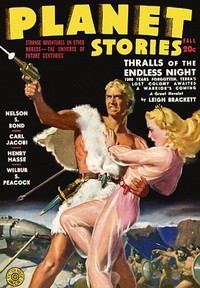
Prey of the Space Falcon
Written by Wilbur S. Peacock
Chaptra reads alongside you — AI insights, chapter breakdowns and reader discussions for every book. Join free
About this book
Reading guide
Themes, characters and key ideas in Prey of the Space Falcon, written by Chaptra AI.
- about 8 hours
- intermediate
- rebellious
- tense
- futuristic
Wilbur S. Peacock's "Prey of the Space Falcon" is a classic mid-20th century science fiction novel set in a dystopian future where the tyrannical Food Administrators control essential resources across the galaxy. The story follows Curt Varga, known as the Falcon, a charismatic outlaw who leads a rebel faction fighting for freedom and justice. Operating from the shadows, Varga and his loyal brother navigate a universe fraught with danger, constantly evading the oppressive Interplanetary Patrol. The narrative delves into Varga's personal motivations, rooted in the tragic loss of his family to the very system he now defies, while also exploring the complexities of rebellion as he combats not only the regime but also the resurgence of dangerous smuggling operations, particularly the drug smothalene, which threatens to undermine his cause.
“They call me Falcon, but I'm just a man fighting for the crumbs they've denied us all.”
Key themes
- Rebellion Against Tyranny
- This is the central theme of the novel, exploring the struggle of an oppressed populace and a charismatic leader against an authoritarian regime. The Food Administrators represent a classic dystopian government that controls basic necessities to exert power, while Curt Varga embodies the spirit of resistance and the fight for freedom and justice.
- Loss and Motivation
- The theme of loss serves as the core motivation for Curt Varga's rebellion. The tragic death of his family at the hands of the Food Administrators' systems transforms personal grief into a powerful drive for widespread change. This theme explores how deep personal suffering can ignite a passion for justice and vengeance, fueling a larger cause.
- The Corrupting Influence of Power
- This theme is primarily embodied by the Food Administrators, who have consolidated immense power and used it to establish a tyrannical regime. It examines how control over essential resources can lead to oppression, dehumanization, and a vast gulf between the rulers and the ruled. The Interplanetary Patrol further illustrates how institutions can become instruments of this corruption.
Worth discussing
How does the novel portray the nature of tyranny through the Food Administrators, and what specific methods do they use to maintain control?
Chapter-by-chapter breakdowns, character arcs and the full thematic analysis come with a free account.
Discussions
No one has started one yet
Questions this book opens up
No discussions yet
Be the first to start a discussion about this book!
Sign up to start the discussionReviews
No reviews yet
Be the first to review this book!