
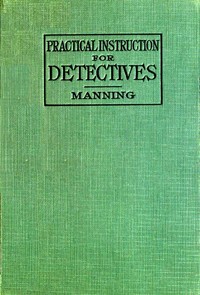
Practical Instruction for Detectives: A Complete Course in Secret Service Study
Written by Emmerson Wain Manning
Chaptra reads alongside you — AI insights, chapter breakdowns and reader discussions for every book. Join free
About this book
Reading guide
Themes, characters and key ideas in Practical Instruction for Detectives: A Complete Course in Secret Service Study, written by Chaptra AI.
- about 8 hours
- intermediate
- Instructive
- Practical
- Serious
Emmerson W. Manning's "Practical Instruction for Detectives" serves as a foundational early 20th-century guide, meticulously outlining the methods and techniques essential for effective detective work. Driven by a perceived societal shortage of capable investigators amid rising crime rates, the book offers a comprehensive curriculum for aspiring detectives. Manning, drawing from extensive experience with private agencies, emphasizes the critical role of systematic training and common sense in unraveling complex criminal cases. It systematically covers diverse investigative methods, from fundamental observation to specific crime scene protocols, establishing itself as a vital resource for professionalizing the field.
“The shortage of capable detectives in society necessitates a complete course in secret service study.”
Key themes
- Professionalization of Detective Work
- This is the central theme, advocating for systematic training and standardized methods over mere intuition. Manning argues that detective work is a learnable skill, not just an innate talent, and that formal instruction is crucial for elevating the profession's efficacy and public standing.
- Importance of Observation and Deduction
- Manning stresses that these fundamental cognitive skills are the bedrock of effective detective work. The book likely dedicates significant portions to honing the reader's ability to notice details, interpret clues, and draw logical conclusions from disparate pieces of information, crucial for 'unraveling complex cases.'
- Combating Crime and Societal Need
- The book is framed by the urgent societal need for effective crime-fighting, positioning the detective as a crucial agent in maintaining social order. Manning highlights rising crime rates as the impetus for his instruction, underscoring the public service aspect of detective work.
Worth discussing
How do the investigative methods described in Manning's book compare to modern police procedures and forensic science?
Chapter-by-chapter breakdowns, character arcs and the full thematic analysis come with a free account.
Discussions
No one has started one yet
Questions this book opens up
No discussions yet
Be the first to start a discussion about this book!
Sign up to start the discussionReviews
No reviews yet
Be the first to review this book!